
Immigration is an ever changing law field in todays world. What i like the most about it – is that it is a “dynamic” field of law field unlike civil and criminal law. When i say ‘dynamic’, i mean to say that it is the most malleable and ever changing field of law which can be amended and altered almost overnight by a federal government as long as the rules align with certain third parties like the international law or the charter of human rights. In todays world where immigration has increased at about 3.6% globally primarily consisting of students and working class individuals, the knowledge of the ever changing landscape is ever more important. This landscape consists of many branches, trade, business, relocation, education and accommodation.
The north American system of immigration law operates similarly although Canada and the united states appear different outwardly on the surface however, they have similar origins of constitutional law and do follow each other when it comes to immigration law. Immigration law appears more stringent in the united states primarily due to its need to regulate high population of immigrants and its own high inland population.
As we become more globalized and connected via the internet and social media platforms , it is imminent there are individuals who wish to do business and the approach is likely to be intercontinental . The international business law is a part of the continuum of the soft policy era as i like to refer to immigration law. Data privacy law: risk, regulation and compliance and trade law, which deals with the essential changing environment of tariffs and taxations by the USA and Canada are an essential copartner of the greater immigration landscape as it is a part of overstepping borders. I’m going to be writing about all of these three in my second blog more focused on Immigration to Canada, business in Canada, and the data privacy laws in North America. Linked to the new blog titled “Beyond Borders” this time – https://journeybeyondborders.co/ your one step gateway to the simplest breakdown of immigration trends.

What we’ll be talking about:
- Immigration law (Canada) and the parts of it synonymous with the U.S. immigration laws. A broad topic taken step by step due to the fluid, ever-changing, and interchangeable nature of immigration laws – ‘soft laws’ as we like to call it. Immigration laws can be changed overnight through ordinances in both Canada and the United States and do require a ‘keeping up with the Joneses’ approach.
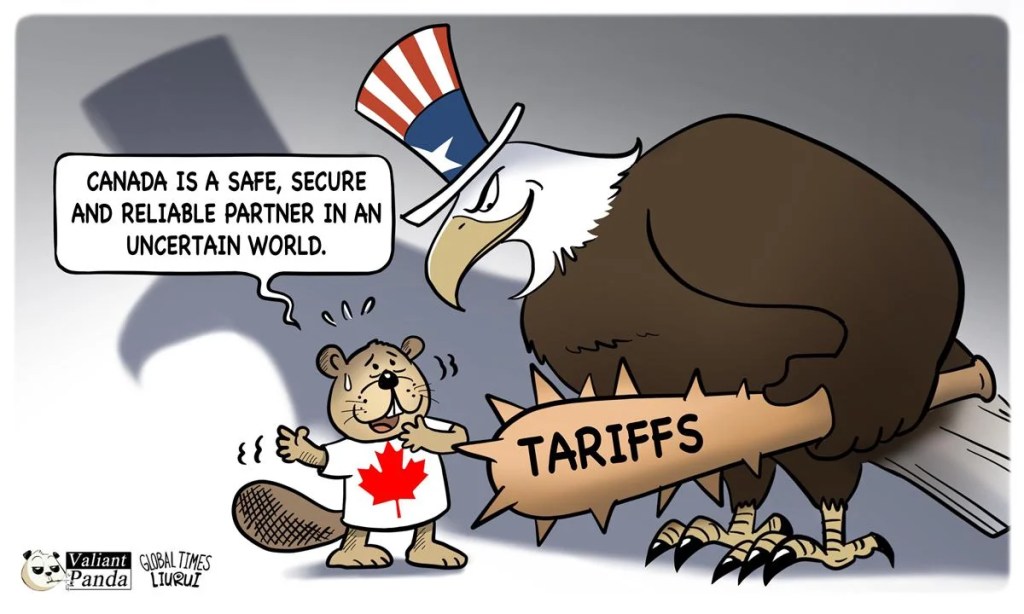
- The changing tariff environment: where things stand and how they are likely to change, in both the U.S.A and Canada.
- Protecting businesses from tariff risks, including best practices for drafting and negotiating contract terms. This applies whether you are a Canadian wanting to do business in the U.S.A or if you are not a part of the CUSMA, i.e., anywhere from China, India, or Europe depending on the international agreements.
- The shifting rules on how goods are classified and valued for import and export, including how to determine the “origin” of goods affected by tariffs keyed to their point of origin.
- Sanctions and other restrictions on exports in the context of geopolitical conflicts and great power competition.
- Foundational principles and terms, and the legislative landscape of privacy and cybersecurity in Canada and internationally. We will consider the parts of U.S.A which are synonymous to help our US based readers.
- The intersection of critical infrastructure (essential services) and cybersecurity, and what to expect from the newly proposed Bill C-8. We will look at a synonymous Law of the USA to assist our US based readers.
- The practical application of norms and “soft law” in the absence of firm regulatory frameworks. How the ‘soft laws’ change your life overnight, your business overnight, and your income overnight.
- Talking about the most uncertain trade environment – changes in U.S. policy and those of its second-largest trade partner, China.
 BeyondTheMargins
Leave a comment