The mantle of the ultimate kings and queens of the rural North is awarded to the “psychedelic living on the edge” category type, who get hired by the Yukon Government of Canada — or the dreaded but “do it just once in your life because you’re an untamed beast at heart” — Nunavut.
For those wondering, the Yukon Government is well known as the best socialist provincial government of Canada, with incredible perks for living, medical care, and salaries. It prides itself in taking care of its employees, and life is described as whipped cream under the province’s wings.
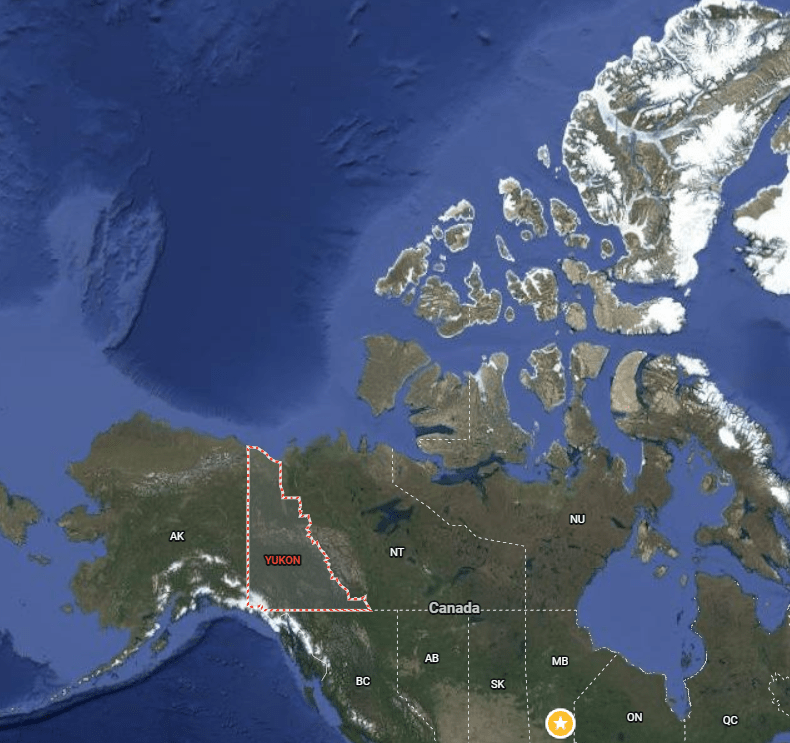
Above, a close-up view of the Yukon bordering on Alaska and British Columbia and other territories.
In 2019, I was selected for a panel interview by the Government of Yukon for a position. The offer was extremely enticing, with accommodation and a monthly allowance for living expenses plus a generous salary. Perks were iconoclastic in nature; you could drive your way to the Alaskan wilderness and get in touch with the Kodiak bears and be a part of the avant-garde of the “few people who’ve done it.” The Yukon was described by those who visited as being very scenic. If you read my previous post on Bissett and its untouched beauty, then the Yukon was described by a friend who visited as Bissett times two. One would be exposed to a kind of beauty and experience that one can witness only once in a lifetime.
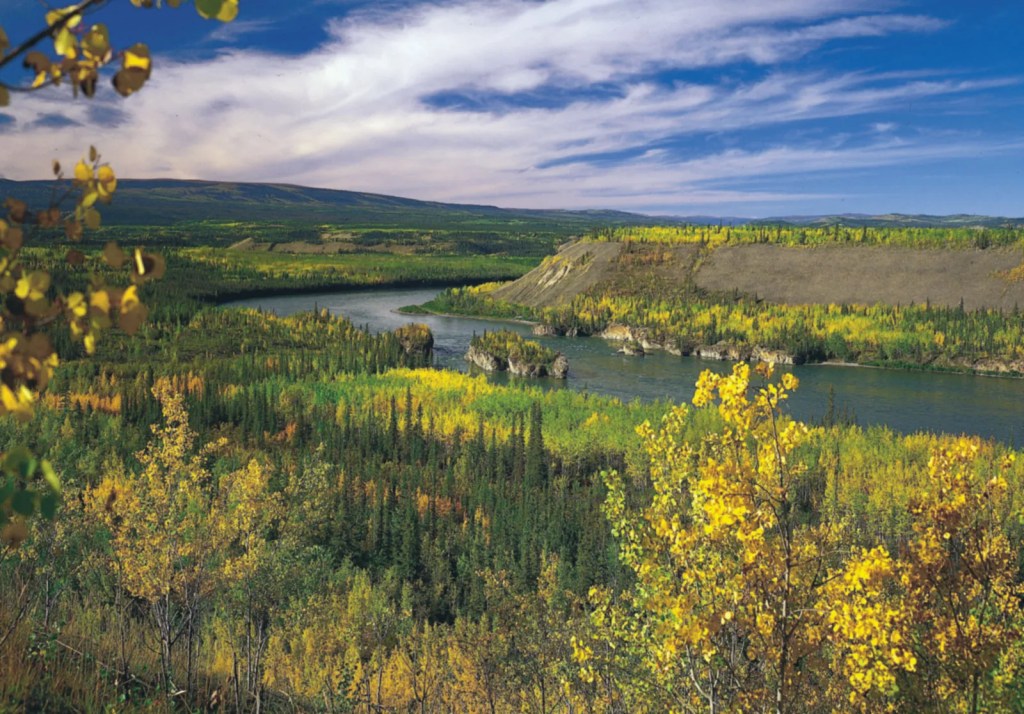
(Above – five finger rapids Yukon . Courtesy Google)
However, I had never worked for the government at the time and was expected to stay in the Yukon for a good 2-3 years. I also had no experience working for Rural North at the time and had no experience working with different First Nation ethnicities, let alone the rural unreachable areas encompassed by the government.
At the end of the interview, the interviewer asked me if I had any questions. I asked the panel one question and that was, “What is your life and experience like living and working in the Yukon?” The interviewer responded that although everything was great and you were ‘mothered’ by the Yukon Government, you had to drive to the nearest town for work about 100 km every day, and in between there was a long stretch of road where the phone service went missing and there was no internet as well, which meant that you were technically ‘off the grid’. Satellite phones were provided to everybody. A 100 km road in the dead of winter at -40 degrees and no network, and I visualized my car going into a slump on the side of the road in the winter with no network connectivity. Suddenly, no amount of the offer was enticing enough, and neither was I going to do it for a good 2-3 years. How about 2 terms? How about more money? I haggled. The answer was a bit like – we are giving you everything, people make money in the Yukon – NO. If anybody has ever tried negotiating with the government for more money (it is a feat few ever really try and even fewer ever achieve anything in) – then let me tell you, it is like pulling teeth straight out of the mouth of a giant walrus. The walrus will eventually roll over you, flat on its back in the process of negotiations while it bakes itself in the sun, and you might die of suffocation underneath it. It sounded like a deal with the devil, and I backed out. However, as I gained experience working for the Rural North, my thoughts and views changed and so did my experiences.
If the Yukon came with a – here’s a ton of money but hey you’ll stub your toe on the side of that table…. then Nunavut came with a – here’s lots and lots of money, you don’t pay a dime, no taxes either, but hey you’ll stub your toe on the side of that table AND you’ll get punched in the gut at the same time (do you like it) ?
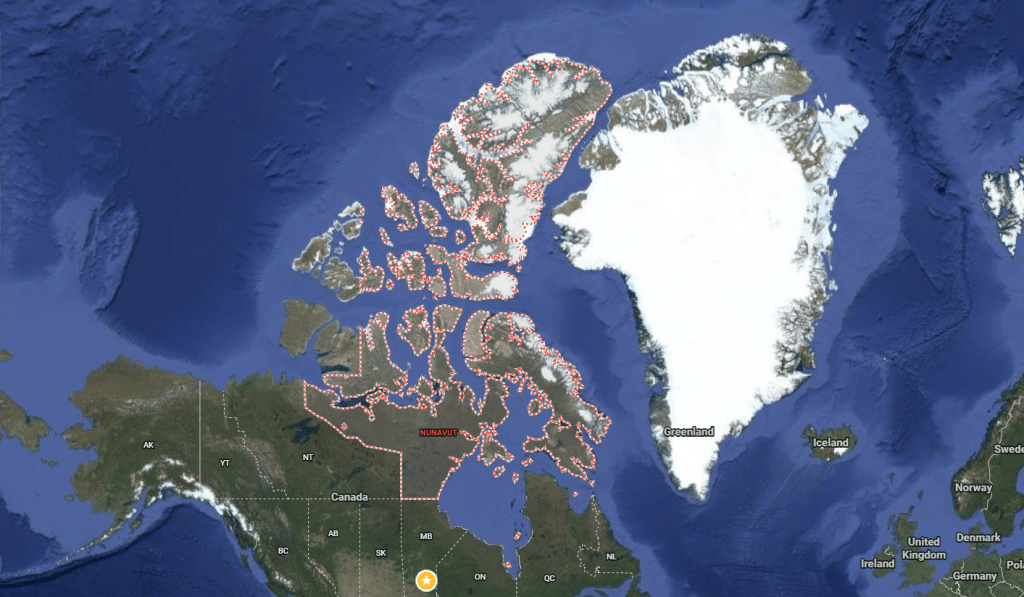
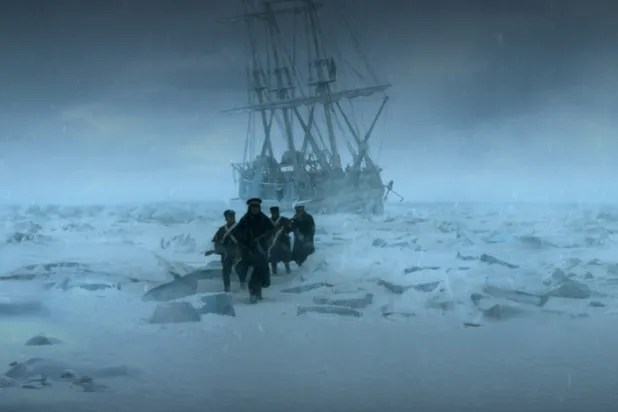
This brings us to the ultimate challenger and mantle holder in the competition – the government of Nunavut and the territory of Nunavut. Below in the map, one can see that Nunavut sprawls all the way across to Greenland. This terrain is where the British expedition of Terror and Erebus, or the Franklin expedition, stranded itself and disappeared while finding its way across the channel. It is reported that the sea froze for a straight 3 years in 1845, freezing the ship on its path across.
Below, a still from the Prime web series Terror and Erebus on the Franklin expedition by Sir John Franklin.
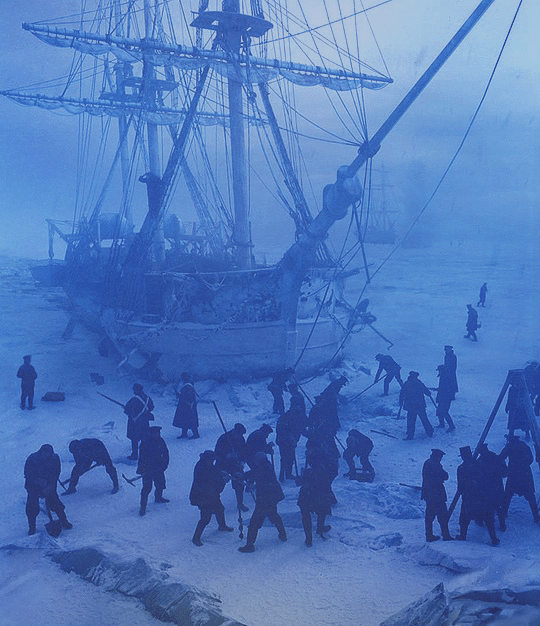
The sea remained frozen for three years as the ship stranded on the frozen ice. Initially, the crew, unaware of the land, attempted to break the ice around the ship but eventually gave up and tried to make their way inland towards warmer lands.
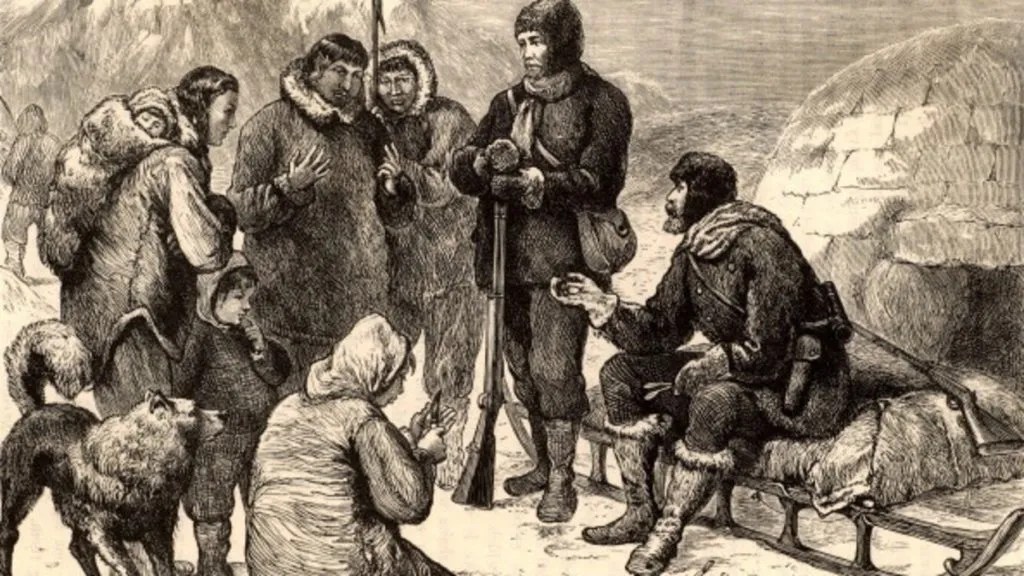
As food resources ran out, members of the expedition met local nomadic Inuit people on the way and asked them for help. However, negotiations were thwarted due to language and cultural barriers. The Inuit, being nomads and natives to the land, had limited resources for the expedition and, for the most part, had never encountered men on large ships and in strange uniforms.
The web series The Terror on the lost Franklin expedition is a highly recommended watch for history lovers. A review by The New York Times for those interested. https://www.nytimes.com/2018/03/25/arts/television/the-terror-review.html

Back to 2025 – Apart from history and being one of the most unfriendly terrains in the world, Nunavut is Canada’s unacknowledged pride and glory. It is home to an enormous amount of minerals and earth metals, including an uncharted and unaccounted for amount of uranium in the Thelsin Basin. This is where the federal government sends some of its finest mining engineers, geologists, researchers, and oil fracking engineers. Nunavut is also home to the original First Nations population of Canada – the Inuit. The Inuit are native to Nunavut, and today they reside in Nunavut’s capital city, Iqaluit. Nunavut is under the jurisdiction of the federal government of Canada directly from Ottawa, and the native First Nations language Inuktitut is a second language of this territory.
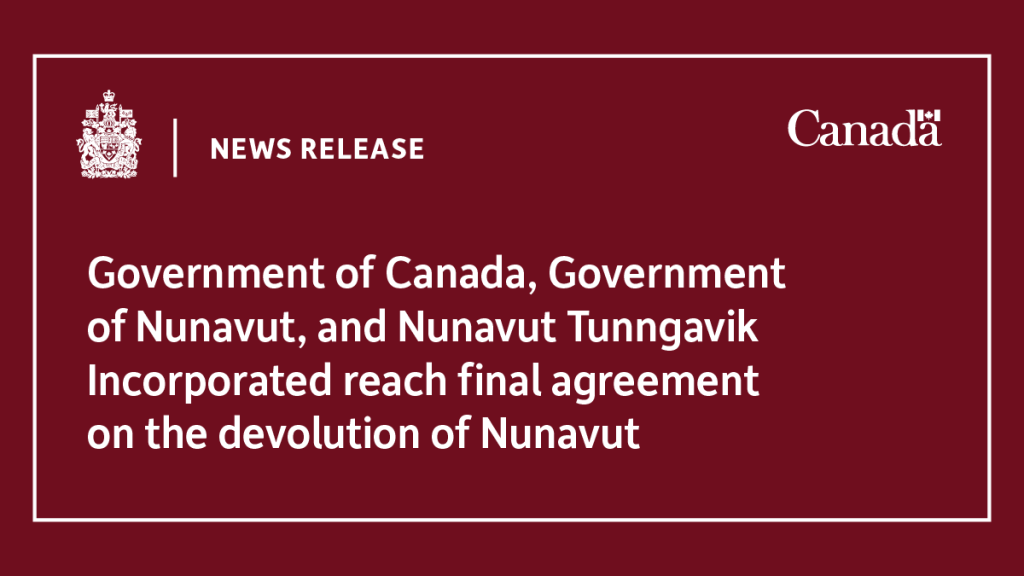
Below is a government job advertisement. This is not Egyptian or Arabic; it is the local official language of Inuktitut in the heart of Canada, and a job posting by the federal government for a position. All government documents are transcribed in local Inuktitut. Needless to say, learning Inuktitut and interacting with the original Arctic nomadic culture is considered a once-in-a-lifetime opportunity.
Working for the federal government in Nunavut defers a title of exclusivity. In Canada, being considered indispensable as a government worker means having the ability to demonstrate excellent professional skills but also a level of mental and physical fitness which demonstrates adaptability in difficult terrains. Not to mention, the rural north government employees not only have impressive resumes but are also physically and mentally fit, some going to the gym twice a day. It often means you work with smart, professionally able, mentally resilient, but also very fit, dedicated individuals. The demands of the job and the climate mean that without a full circular system of stability one cannot perform. You’re considered exclusive if you worked for the government in remote lands; however, if you have just 1 year of experience working in Nunavut, then you become part of a club where someone might just pick up your resume and almost always mention, “you worked there?”. One must show that one is ‘unique’, is professionally capable, and one can do what others cant. Nunavut is part of having an experience that is not obtained elsewhere and in a terrain not experienced by majority, which confers a title. After the title is conferred, getting other government jobs is easy as you transfer within the branches, and getting private jobs is more easy than anything.
Coming back to the ‘stub your toe and get punched in the gut at the same time’ part. Nunavut has a strong native demography inclined to self annihilation. The Inuit population did NOT adjust generously to the Anglo Saxon invasion of the land and the adaptation to the capitalist culture of great Britain. Inuits – native to the land, spent a lifestyle that was nomadic, building igloos and using it as a hut and whale hunting. One might read in the lost Franklin expedition and remember that the crew had to ask the nomadic Inuits for help in the terrain, who were – at the time – doing just fine. The induction of the western lifestyle meant a sudden shift from a biological legacy of a thousand year old adaptation of survival in the harshest climate in the world. This led to suicide rates soaring with the government trying to maintain composure. No matter how reputed the job profile as a federal employee, one would be exposed to some form of destruction. temperatures dip to – 40 in winters with minimal sun time. As a result, the government hires professionally adept people, but will not offer permanent positions to anyone who is not native to the land or who is not Inuit. As a federal employee in Nunavut, one is hired on a contract basis, and one is shipped in and out, with no long stop overs to prevent one’s mental health from heading into arrears which money cant fix. This rotation applies to all employees, from geologists, engineers, to managers, directors and chief of staffs.
Many wonder why someone would be drawn to working in Nunavut? The checklist is very very long. Nunavut provides its government employees with the highest amount salaries and the maximum amount of perks which are unattainable by any other government. Accommodations are covered, including flights in-home and outland, tax-free high salaries, allowances for personal expenditures in thousands, full medical coverage and flexible contract basis work. Employees work for 6 weeks and take 3 weeks off when they are shipped back to the inland into warmer areas for relaxation by charter planes. The usual style for Canadian employees is to work for a total of 1 year, out of which work is carried out for 6 weeks intermittently in schedule with a 3 week break in between. Most people work for a year, and take the next consecutive year or two off due to the income they make often in 6 digits of savings for a roughly 6 month ‘active’ work of very straight-forward 9 to 5. One builds a brand befriending the most hostile environment, making one unique and having contacts with the most isolated cultural population in the world. Apart from that, one is exposed to a second culture shock where one witnesses Inuktitut in local stores and shops, and encounters a completely different ancient culture of Canada.
There is one more thing that draws most government employees who already have experience in the rural north here…rural north is addictive. Something about the lifestyle of harshness, the need for extreme physical and mental fitness, and working with the best in the government makes people want to come back to it. They want to stay a bit longer and leave for their ‘normal lives’. Some explain that ‘normal life’ feels far more sweeter, with small moments savored in-depth after experiencing the frazzled delirium of the rural north, which is described as rewarding. Needless to say, the gym is your friend, so is a vegetarian diet and vitamin D capsules, and a quiet corner in your room for updating your studies. For 1 year, all you do is ‘work for the government’. Nonetheless, when the 1-year mark is off, you return a new person, perhaps like the members of the Franklin Expedition – but having conquered the terrain.
 BeyondTheMargins
Leave a comment