This is a topic I’ve been wanting to write about for the longest time, but I have been in deliberation due to its nature. But the 13th of November is approaching, and I have made up my mind to write about it on a 1-year term. This is my way of saying – the assignment is completed, odds are defeated, in writing, signed.
On the 13th of November last year, I was out for work to a place in the rural north called ‘Stonewall’. This is an ironic thing because out of all the places I write about in the rural north, I had never visited Stonewall during my time in the government, and that was the first time I was supposed to visit that location. It was a new area; I grabbed a coffee, and on our way, we went.
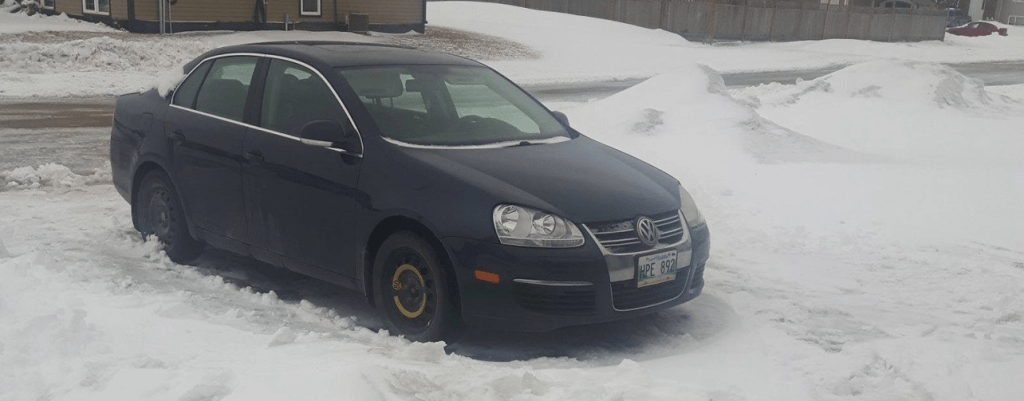
At the time, I owned an incredible vehicle – a Lexus ES 350, year 2015. The vehicle was my second car after my beloved navy blue Volkswagen Jetta. My Volkswagen Jetta was my first car and cost me about just 5,000 Canadian dollars. Let’s just say I loved my Jetta and even nicknamed it. Bessie already had about 140,000 km on it; however, I drove it religiously every single day to university, to the research center, and to almost anywhere else. A few snapshots of Bessie.
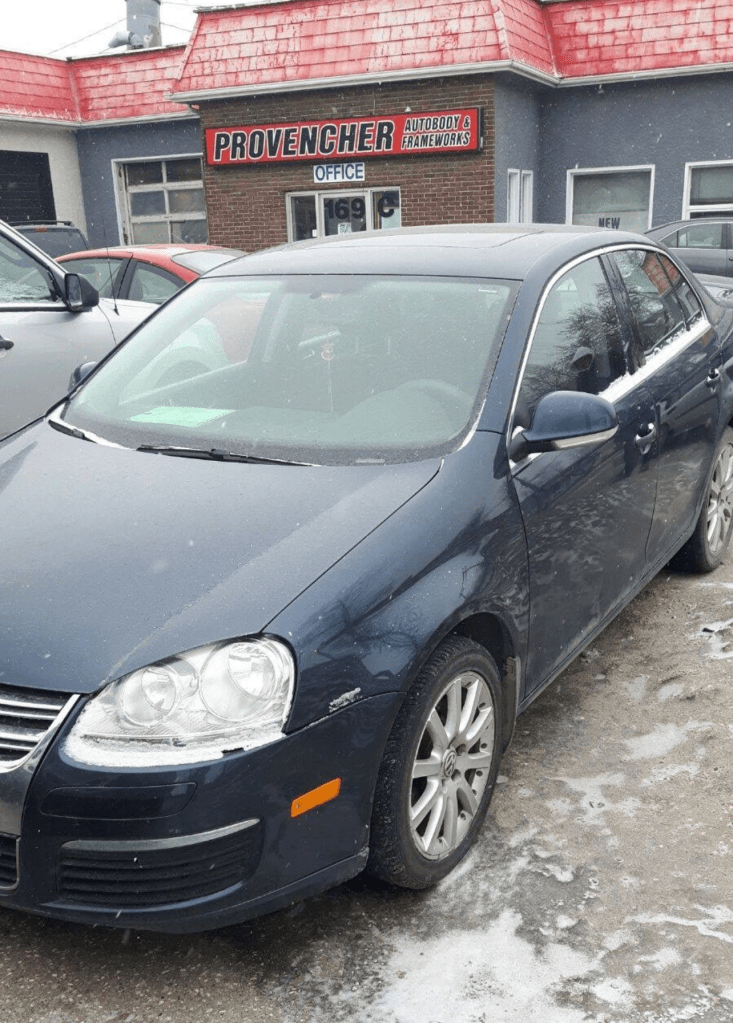
On the day i bought Bessie, around 2017, from Provencher auto.
For the record, Bessie was a second hand and Bessie was not a looker, she already had lots of km on it and she was just a 4 cylinder German made Volkswagen.
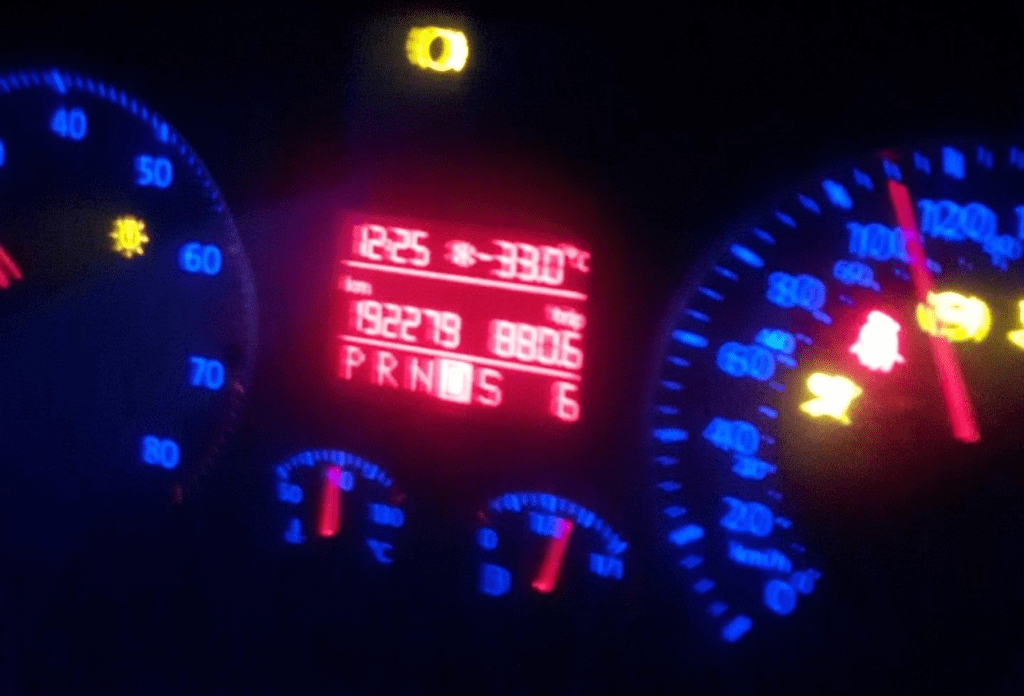
Bessie also was driven a lot, and in very harsh climates, and because Bessie was my first car. Bessie could ‘endure’ a lot, and here is a picture of her odometer taken, in -33 degrees Celsius on a January morning.
If there was a saying ‘drive a car till it breaks’ – then I might have done it twice already in my lifetime.
Bessie finally gave in when her transmission blew up, and the cost of repair far exceeded her value. Believe it or not, I still sold a lifeless Bessie to somebody for just about $700. It was fun but emotional watching it getting towed away.
After the goodbyes to Bessie, my father put pressure on me to invest in a sturdier, better car for the Canadian winter. I had saved up money from my time as a behavioral analyst, and I decided, well, was I going to burn it? The culprit in the purchase of the Lexus ES 350, which was completely opposite of Bessie, was an ex-boyfriend who owned a Lexus RX 350, an all-wheel drive, 6-cylinder SUV. After Bessie passed away, I gave his SUV a test drive. I remember the garage door opened, and there was 2 feet of un-shoveled snow right outside the garage on the driveway. Normally, any car that would go over such snow would get trapped. However, those were not things that happened to this car. At about just 10 km/h, the car went right through the snow. If one sat in the driver’s seat, one would not even realize that the car just blasted through a mountain of unshoveled snow. It left such a mark that I made up my mind and purchased a Lexus. It was also beneficial that Lexus was the only car that almost never depreciated in value (do your market research). Which means your Lexus returns on resale would be quite a bit. Which means sometimes you buy an expensive car, but pay nothing for it in net after resale.
So came a Lexus ES 350, a 2015 model, a white sedan, just perfect for me, paid in full for a full $33,000.
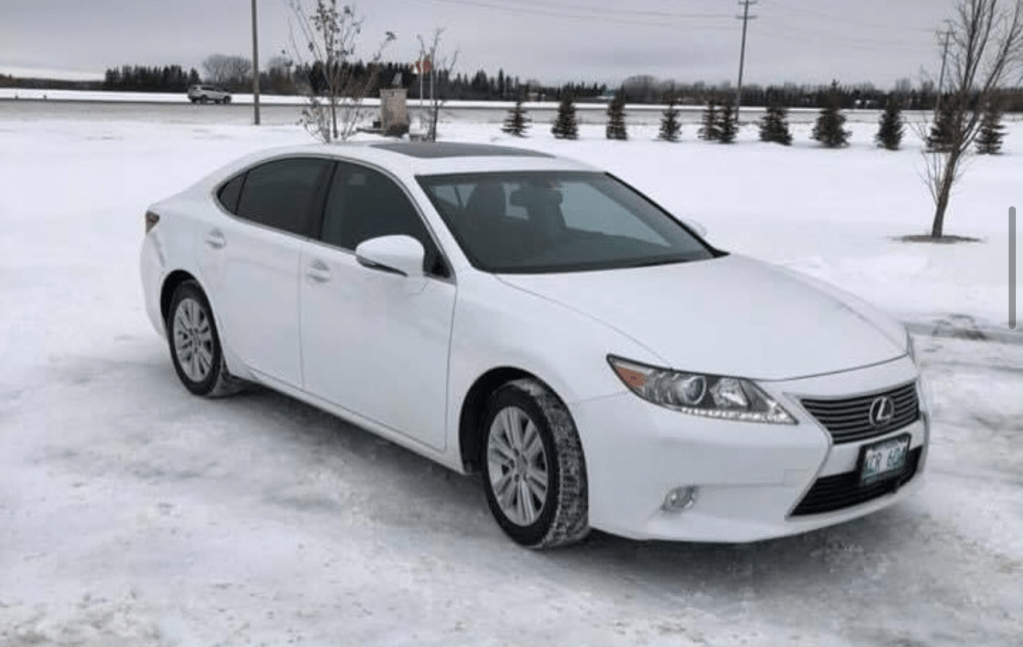
Above, on the day I purchased it. This one was named Princess due to its attributes that were in complete opposition to Bessie. Princess only drank premium fuel; I mean, it could drink regular fuel (if it wanted to), but its owner provided only premium, had 6 cylinders, heated seats, heated steering, a sunroof, a built-in GPS, and a remote start for tardy winters when the car would warm itself and plop you in a nestled warm car straight from your house in -30 degrees outside. The point is, +20 degrees or -30 degrees, Princess took care of you.
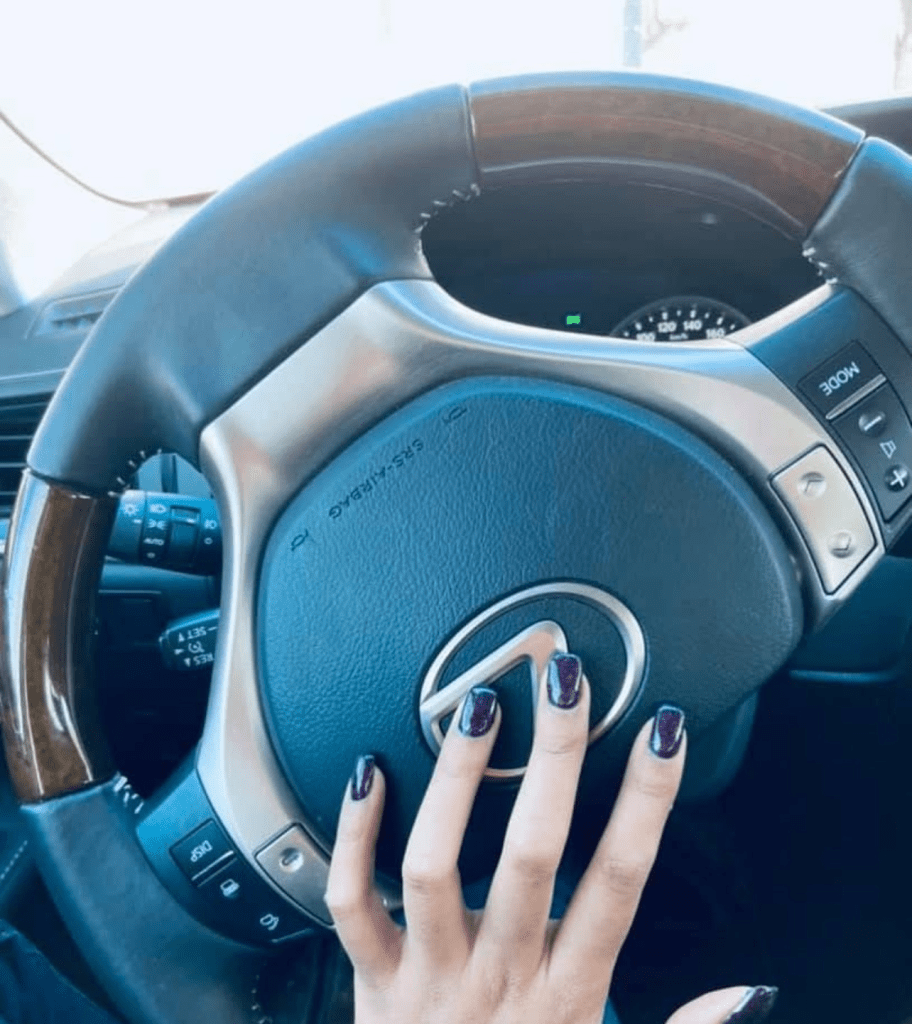
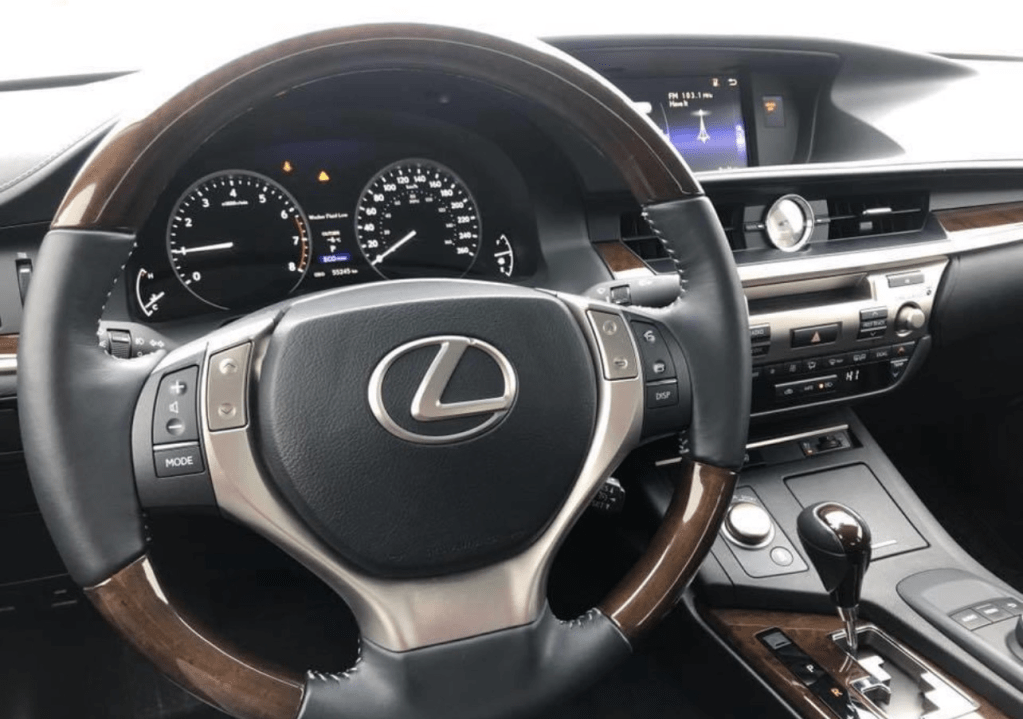
Sometime with me and Princess.
if you think about it, choosing the right car was like choosing the right life partner – you wanted to invest in something well made, sturdy, reliable, preferably a six-cylinder from a company with a great reputation signifying pedigree. You wanted to make sure looks did not exceed quality and that the car was unbreakable in different terrains. Co-existence should be dependent on each other, and most days should be smooth and full of mutual love. Most of all, parting with the car should never result in unnecessary damages. Then you would know you invested in a great car. This would be in quiet contrast to a cheap bright red-colored Chevy which would look great and eye-catching for five minutes on the road in public, but would give you grief every single day in damages, repairs, unpredictability, and the attention required to maintain it, and the parting would be nothing more than poor quality control covered by bright shades of red – you could pay with either losing your life or losing a lot of money.
Anyway, as my work in the government required me to cover rural north and long distances, instead of taking the government fleet, which was highly equipped by itself, I preferred taking Princess due to the comfort level. Princess went with me to Pinfalls, Winnipeg, and all surrounding areas of Beausejour for court purposes except Churchill and Bisset, and it ran literally every single day incurring about 100+ km and never flinching in negative degrees. I owned Princess from 2019 till November 13, 2024, and it reliably ran with me every single day in all climates until then.
Back to the day of November 13th 2024…
So i was on my way to ‘Stonewall’. It has to be known that in the areas between locations in Canada, the speed limit is 100 km/hr and sometimes 110km/hr. As i drove about 50 km from home base, i encountered a four way stop.
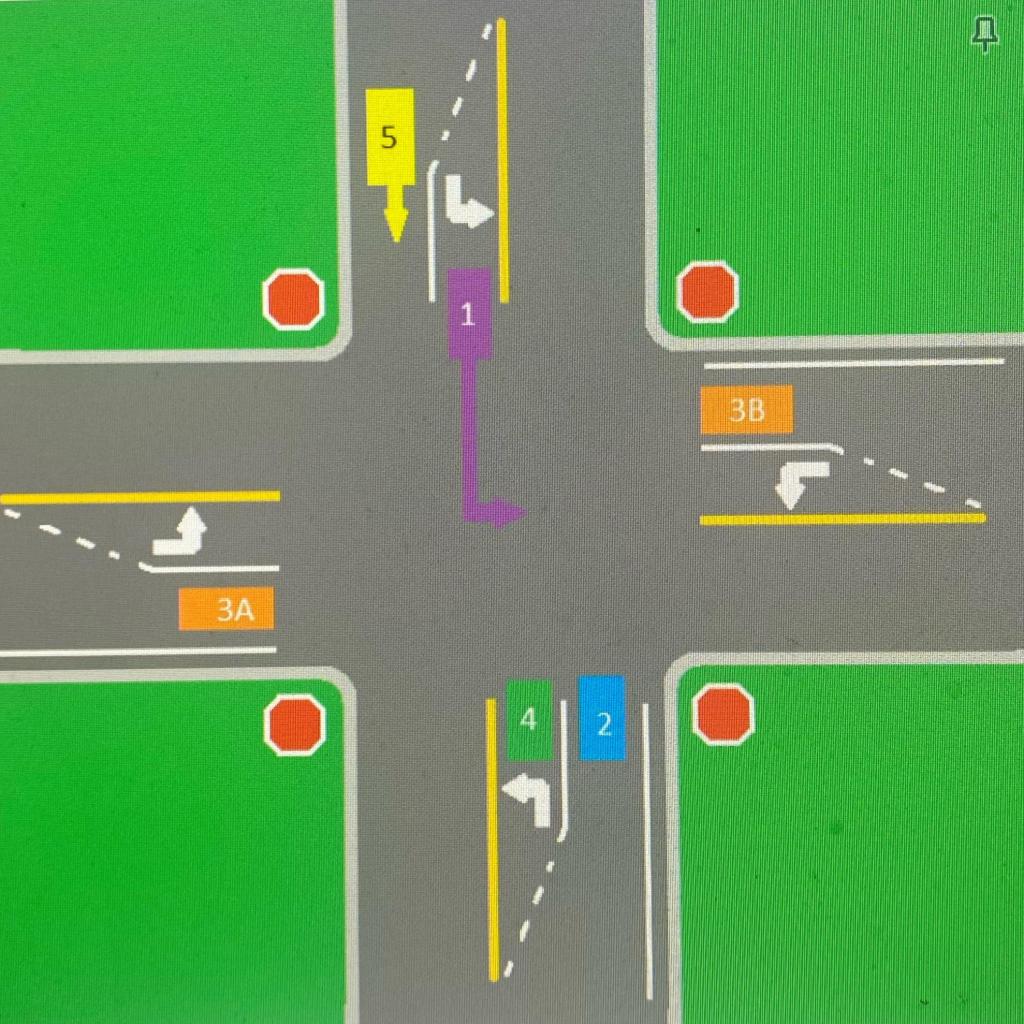
These country four way stop overs are tricky because the speed limits of all parties before approaching the stop sign is about 100 + km / hr. By logic all assumptions of the other party stopping are made in true faith. One just assumes that when it is your time to go, the party approaching on the right would stop as they have a stop sign. Until it doesn’t – faith – is such a funny thing. As i waited on the stop sign , there was a red sedan on my opposite stop sign who arrived right after me. On my right, i noticed an SUV approaching, a bit far away. It was understood, he had a stop sign in place and it was my turn to go. As i approached the road slowly accelerating at 10km/hr i was T-boned by the SUV at about 120 km/hr.
This is a T bone.
For reference, A 5,000lb SUV at 40 mph, can exert over 41,000 newtons of force at a stationary vehicle. A 5000lb SUV at 3 times the speed would exert about 123,000 newtons of force at a stationary vehicle. If the stationary vehicle is not at rest and is slowly accelerating forward at about 10-15 km/hr then this number goes up a bit. 123,000 newtons of force would be considered equal to the force required to move about 12.3 metric tons of weight at an acceleration of 1 m/second square. A Lexus ES 350 with a sturdier made bodice, weighs about 1.67 metric tons. A lower grade car like a Honda civic with a poorer construction material weighs about 1.2 metric tons. The car on my other end, a red Pontiac sedan weighed about just 1 metric ton.
It meant once the collision happened, the SUV hit the right engine side of my sedan with a force of about 12.3 metric tons. Pretty much enough to send the car flying and rotating due to the impact and all the way to the opposite side of the four way at lightning speed, on to the red parked Pontiac sedan weighing about just 1 metric ton and flipping it sideways in the process and then ending up in the ditch – on the other side of the four way.
It resulted in this.
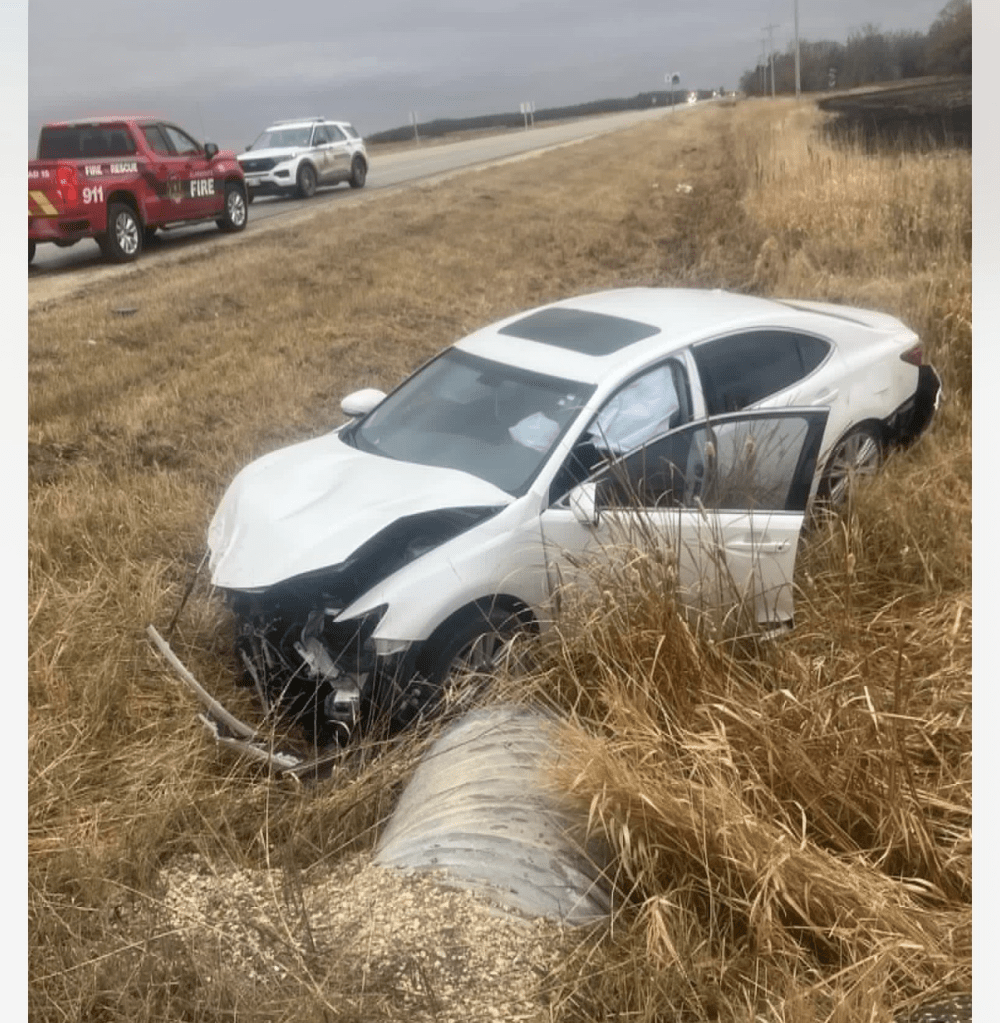
If anybody has ever been hit by a vehicle with a force of 12.3 metric tons, then i have a few things to say about that. Your car drivers seat is like a cockpit, but as the collision happens you can see the car crushing inwards on you. The air bags come out, the smoke starts coming out and the doors break on the inside and become crooked. Your body has this incredible mechanism of sensing that something is wrong far before your brain has time to understand what is happening and it releases this mind numbing dosage of adrenaline reserved only for such special times. It means if you dislocate a body part due to impact, or fracture something, you probably don’t have a clue. As i got out of the car, i felt numb. Noticing smoke coming out of the SUV’s car, I tried to open his door, it didn’t open so i went around the other way and tried it there. We haggled a bit as passer-bys stopped by to help and 911 was called in 5 minutes. Our driver was a 25 something, a little high, a not completely right, young Canadian male. Our other driver in the red Pontiac was a 40 something absolutely stunned man. He climbed over the top side of his flipped car and his only words were ‘what happened’?. Our young 25 yr old Canadian male, looked at us and said ‘sorry’, I looked at my car and said nothing. We all said nothing. People just looked at each others faces for the longest time.. Nobody blamed anybody, and no single instance of crap throwing occurred. paramedics arrived and asked me if i was hurt, I said i was not and i was ok – i wasn’t. I had a mild shoulder dislocation and went home in a sling. On the surface however – everybody looked fine. We thought we made it well and thank the lord for that.
There’s this thing about accidents – they tell you whose your friend , who will stand by you, who would take a bullet for you , and who are just overall dirty people. Accidents will tell you exactly whose who in a very raw format. Accidents reveal these things in a very nonchalant way. If you let people know you had an accident, majority of people empathize and offer support. There is this small subset of poor; charactered individuals, their mind works differently, they shrink from you if you had an accident, as if it was something that could never happen to them, and often in splits of seconds you read their entire character through small gestures. Small gestures and their timing are a very dangerous little thing, they tell you who is ungrateful, who is generally stupid, who is deludedly arrogant but in reality is good for nothing, what is the standard of the character, what is the mindset.? Accidents can make assholes and their feminine counterparts unforgettable in the mind and built with a negative reputation that is very hard to break. Accidents also tell you, via who you chose to call right after the accident, when immediately out of your car, who you actually trust the most but thought that you did not. These lessons don’t come by easy and its not easy for the reveal to be so easy.
There’s another thing about accidents – when you sit in an object and get hit by a force of 12.3 megatons. You think you are ok and everybody else is ok, you think you are lucky and you’re very happy about that. But your body absorbs the kind of shock which – lets just say it normally does not and has no business absorbing on a regular basis. After a few months, even though you thought you were ok, the aftermath starts coming out.
There’s a third thing about accidents – If you are not a person of faith, it has an incredible capacity to restore faith and create inner strength. Intellectuals like to think faith is for stupid people. In my experience, via both scientific theory as well as experience with individuals, that is one of the greatest generational lies. Faith is the absence of secondary thought, which means it is a form of effortless concentration. Nobody ever beat a brutal addiction without faith; nobody goes to bed at night without having faith that they will wake up the next morning. People go to work every day because they have faith that today will be like all the other days before it, and if you think that your father is your biological father without any evidence of it, then that is faith as well. The first native premier of Manitoba, Wab Kinew, was a raging alcoholic in his youth with multiple DUIs; he reformed his life, went to college, and became the first First Nations premier of Manitoba. ‘Ando pawachige’ in native Cree Ojibwe – find your vision’ which means, find your faith.
This is a true paradoxicality of nature. One might assume, on the externalities, that accidents are an ‘unfortunate thing’ to occur. But unfortunate things are unfortunate only as long as they exist in the mind. There is far more misfortune in the minds of regular people with great lives than individuals who encounter accidents or break bones or die in wars. Accidents are not one of those man-made misfortunes of the mind. It is a real external event of great physical shock value, which one has no control over. When one faces the fact that one survived by a hair’s breadth, you can understand you have more business to do in this world. Ironically, mind-made misfortunes of the human mind have more power than 12.3 metric tons of physical impact, just enough to make people jump off balconies without having any accidents at all. The paradoxicality of nature is that you could meet people with very hard lives and great responsibilities with their heads completely sane sitting between their shoulders, while you could find individuals with absolutely no problems in life willing to throw themselves off cliffs. It makes one wonder, man is built to carry the burden, and man carries the burden through the power of faith. If man does not carry the burden, his mind suffers; if man does so without faith, he obliterates.
There’s this thing about Canadian car insurance – it’s easy, they care about you, although we mostly like to think they don’t. The love is often in the form of a reimbursement of a written-off car’s full market value.
Post the accident, I visited the car yard to retrieve objects out of my Lexus. I was surprised to see the car bent and turned in different directions, but not a single part of the car’s body was actually torn apart. In sum, this was a detail in the car’s construction. Since the car’s body was sturdy enough to take the damage, the car spun around after the impact and landed on the opposite side. If the car’s body had been weaker, like a Honda Civic or generally 4-cylinder cars, then the impact would have torn the body apart, dragging it along with it. Makes you wonder – spending that money on a Lexus was probably worth it.
Aftermath, Achievement and Self discovery. .
Within 2 weeks of the accident, I changed an entire country. I had a few plans in the process, and I chose two things which appealed to me: short-term integrated effective therapy and law. Both are opposite to each other and equally demanding in nature. Although opposite to each other, I felt like the combination ‘completed me’. After all, this is what I did in Canada.
One morning around the 7 month mark i went to take a shower, as i came out of the shower, i experienced a shock and fell on the floor, this time unable to get up due to pain. _Accidents, interesting unpredictable little things.…_As family members haggled and took me to the hospital, what resulted in was a mild nerve dislocation due to the physical shock on the body enough to put someone on bed rest. Fortunately nothing more. However, An accidental x ray on the way back home which i was vehemently resistant to brought into light a hair line fracture right below the nose. Could anyone possibly roam around for 8 months with an invisible fracture on their face? Was this even a reality? apparently yes. The air bag that came out was the culprit. We were looking at 3 months of bed rest and a subsequent bone grafting surgery for the fracture. I had commitments, I was on a leave, I had to build something, i cared about my time, i did not know how much i cared about my time….
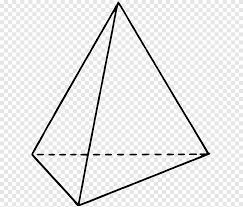
When things like these happen at a continuity, and you have demands to fulfill, there is a fulcrum point in the psyche that is reached; it is described as the void. Your conscious mind does not know who you are, a treacherous amount of pressure pushes you towards the void. The fulcrum void is imagined to be in the shape of a tetrahedral triangle. On top of the pyramid is a tipping point; from the tipping point, the psyche turns into unknown directions based on unknown powerful unconscious forces. I like Jordan Peterson’s quote on this ‘you are NOT who you think you are, the world is not what you think it is’.
When you hit the void, behaviors don’t go the way you thought they would. Human beings are bad judges of predicting their own behaviors. For example, you can be a preacher of humanities, liberal arts, and women’s rights, but when a riot erupts and you hit the void, you might be the first one to run away while stealing someone’s purse. You might be quiet, docile, an emotional person, but if you faced bullying circumstances and by chance you hit the void, you might evolve into the greatest nastiest bully in the schoolyard. The tetrahedral pyramid shape deferred the unpredictability of which way the psyche is going to swing. Sometimes, severe drug addicts who rolled and fell into ditches at night hit the void, and transformation occurred. Carl Jung, the greatest psychologist who ever lived, called it the dominatrix power of the unconscious mind. He described the unconscious as a void where strange chemical reactions occurred. Love, friendship, hatred, were the results of powerful reactions within the unconscious. It was like we went post to post in life, touching everything around us, and in turn, it touching us, and both changing in the process and creation was an unstoppable dynamic process happening in nature in real time.
Hitting the void meant a few things. It meant waking up each day, fastening the belt, and sitting down for what was necessary. When the surgeon asked when you wanted the operation, you picked the earliest date—not because you liked the surgery, but because all you could think about when he asked you that question was the deadline. To you, surgery was just like going to a car mechanic and getting a tire change: it had to be done, so you went in and came out. Right after surgery, you stopped by at the photostat shop to get copies of the required papers on your way home. You’d seen this side of you before—working in the rural north in -20 degrees, ice froze on your Lexus windshield; you opened the windows and drove the car to the nearest gas station to buy antifreeze so you could go back to work. This is who you were. You were some type of a white unicorn workhorse, the one with the stylish mane.
The slogging meant – changing a country, completing 1 complete course in a full night shift, applying to Queens but not really giving a shit about it because, well, you were a workhorse. All you did was click * click * click * and voila after that, it quickly emulated into something like ..well – whatever. All this in just 10 months with accidental increments of the accident that you had mostly completely beaten. Now you were suddenly in class with some really smart people including a Canadian diplomat; the view was astounding for a bit, and you were making friends with incredible high achievers of the federal government. You still had the imposter syndrome, but the diplomat who you thought was smart told you that he too had the imposter syndrome…
Meanwhile… you have many plans, this, that, and Nunavut (someday). Your mother doesn’t get you – got into a Canadian Ivy only to want to go back to the rural north – is this some type of come/go psychological derangement syndrome?
Meanwhile …at work ..
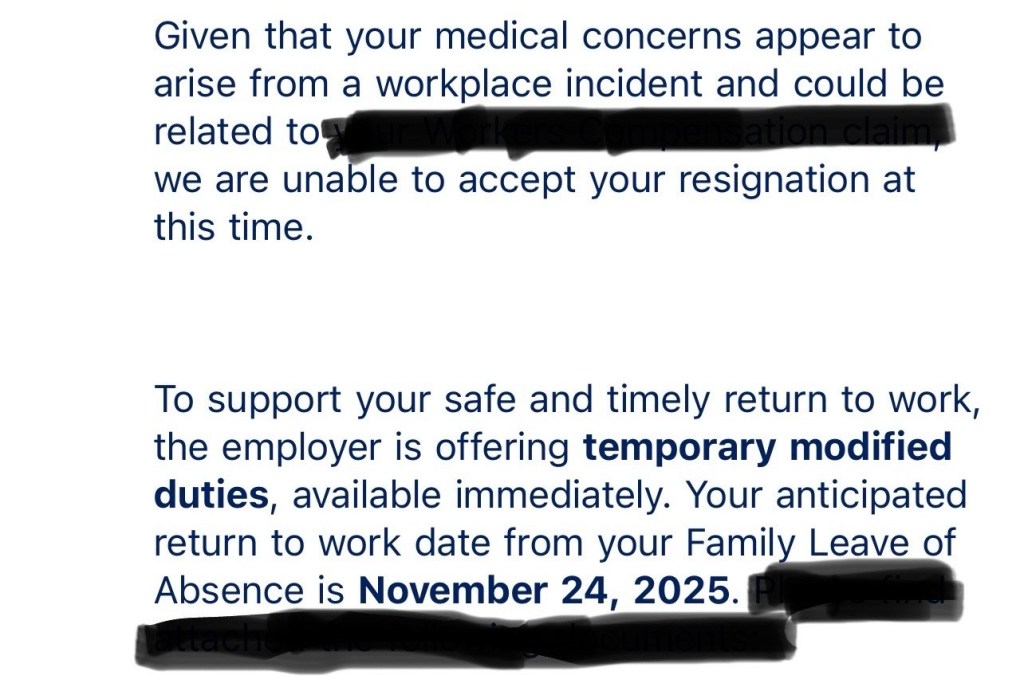
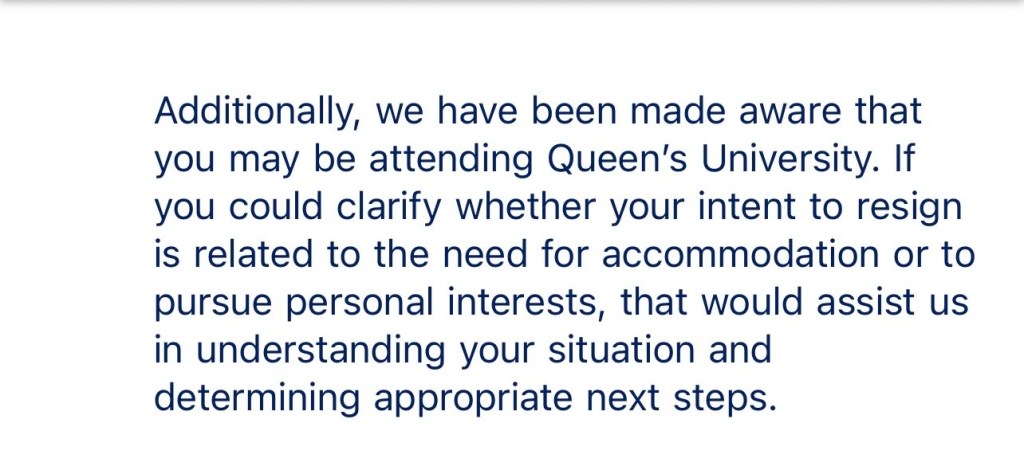
In these times of professional oddities and recession, if you hand in a resignation and the employer responds with something like the above, it can lead to a reaction that is something like this..

you want to respond with something like this –
Listen – ‘Lainy’ ………I aint comin back!
Apart from that, from a unicorn’s point of view – that was at least what the view was. In less than a year, within 9 months of changing countries, the horse had 1 thing in the pipeline and another thing ongoing, was actively working towards getting back on the treadmill and recovering, and was beating all the odds, paid for school, rent and was not going to need any help for setting up a business either because everything was lined up. The unicorn did not bother its parents for one single penny or any decision. The unicorn was going. No matter what the weather. The horse was running. People stopped by on the way and complimented the horse, its uniqueness, its humbleness, its strength, ability to ride through; they were seen as passersby. It did not touch the horse, it was going….
Back in 2019, there was a game released by Rockstar Games in the United States that made a billion dollars. It was titled Red Dead Redemption 2. The protagonist was a criminal outlaw named Arthur Morgan in late 1800’s America. Morgan was an outlaw, and he had an all-white horse with a beautiful long white mane who he had tamed in the white snowy Appalachian mountains.
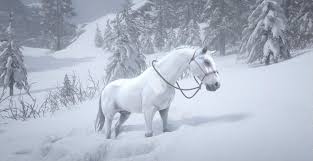
(Arthur’s horse from RDR 2)
Morgan committed heinous crimes all his life; along the way, he contracted tuberculosis, which was deadly in 1800s America. It was then that Morgan decided to change his ways. The game title sums it up.
Arthur Morgan is committing crimes, so he is Red.
Arthur Morgan contracted tuberculosis, so he is Dead.
Arthur Morgan decides to turn it all around, so he is in Redemption.
Red. Dead. Redemption.
It’s a story about faith and personal transformation through oddities. Morgan rode into the sunset in his last days on the wild horse he found in the Alapacean mountains. At the end of the sequel the wild horse gave in loyal to its master and the master had to do it alone.
Arthur died on top of the tallest hillside overlooking the most beautiful sunrise in the game. After of course, he fixed all that he could fix.
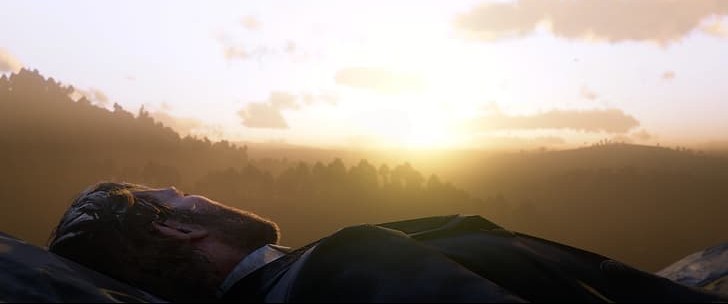
One could think that one didn’t ride because one had to smell every rose on the way or hold every vision that passed by; that wasn’t the purpose of life. One rode because they had blinders on, something had to be done, and it made every rose on the way and every view in the path seem frail. You could stop by for a few seconds to take in the view, but you couldn’t stay there forever.
There was some place you were heading to; you didn’t know where to, but you knew it would be grand. Sure, you had desires here and there, but that’s not where you were heading to. If there wasn’t much to think about, then Wab Kinew, the first native premier of Manitoba, summed it up when he beat his addiction that left him with nothing – Ando Pawachige (find your vision, find that faith).
 BeyondTheMargins
Leave a comment