This is a different kind of post.
Organ donation is a very iffy and controversial topic in India and many other cultures. The idea makes people afraid and uneasy psychologically. However, one has to keep in mind that organ donation via official and legal routes in India is extremely time-consuming and exhausting for a person in urgent need of the transplant. India has high rates of human organ smuggling rings and also individuals in dire need of finances who sell their organs for lowly rates. In such a scenario, if a person would like to be donated an organ the correct way, they must obtain court approvals, which can take a bit more than one good year itself. The court makes time to ask the donor if the donor was pressured into donating the organ, either psychologically, financially, or if any other kind of coercion was involved in any way. Often, the individual in need of the transplant possesses a family of his/her own and spends painful months to years awaiting approval, which can even cost their life.
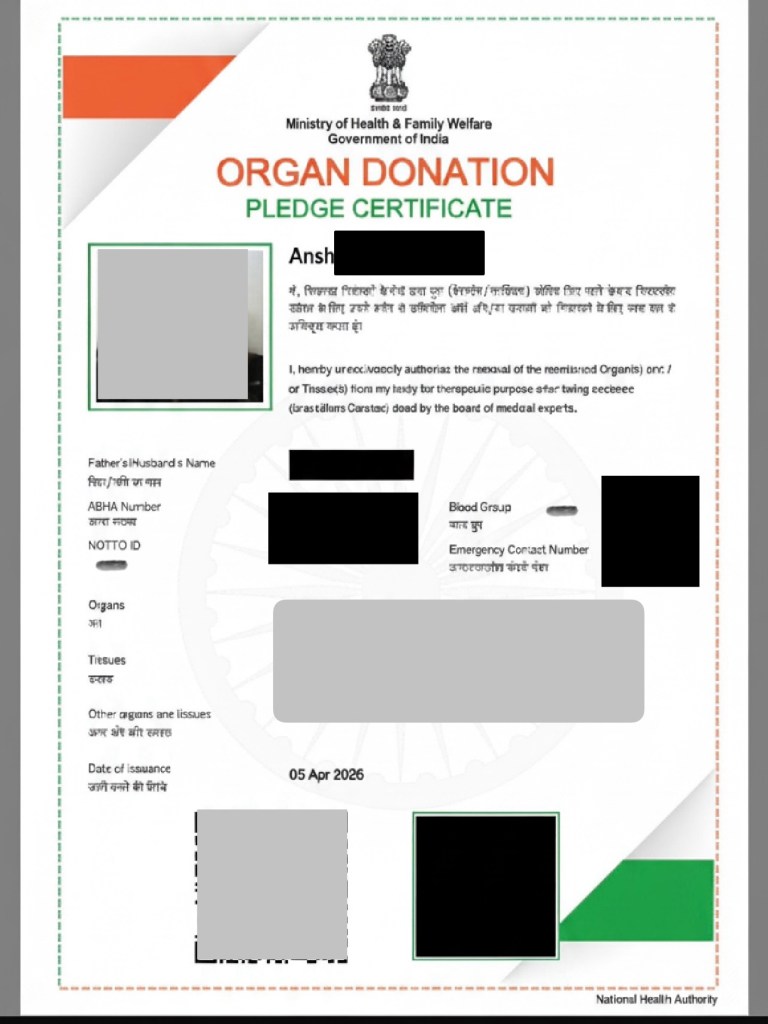
In such a scenario the best and fastest method is to register for NOTTO (https://www.notto.mohfw.gov.in/). NOTTO is Indias most legitimate government agency on organ donation and doctors look up the registry to find the latest deceased for urgent purposes of a transplant. The National Organ and Tissue Transplant Organization (NOTTO) is the apex body in India responsible for regulating, coordinating, and promoting the donation and transplantation of organs and tissues. To pledge, visit: https://notto.abdm.gov.in. 24×7 Toll Free Helpline: 1800 11 4770.
In Canada, organ donation registration is managed provincially, not through a single federal registry. You can pledge to be an organ donor online through your provincial health ministry or during services like driver’s license renewal. https://www.blood.ca/en/organs-tissues/deceased-donation/organ-donation-after-death
MYTHS:
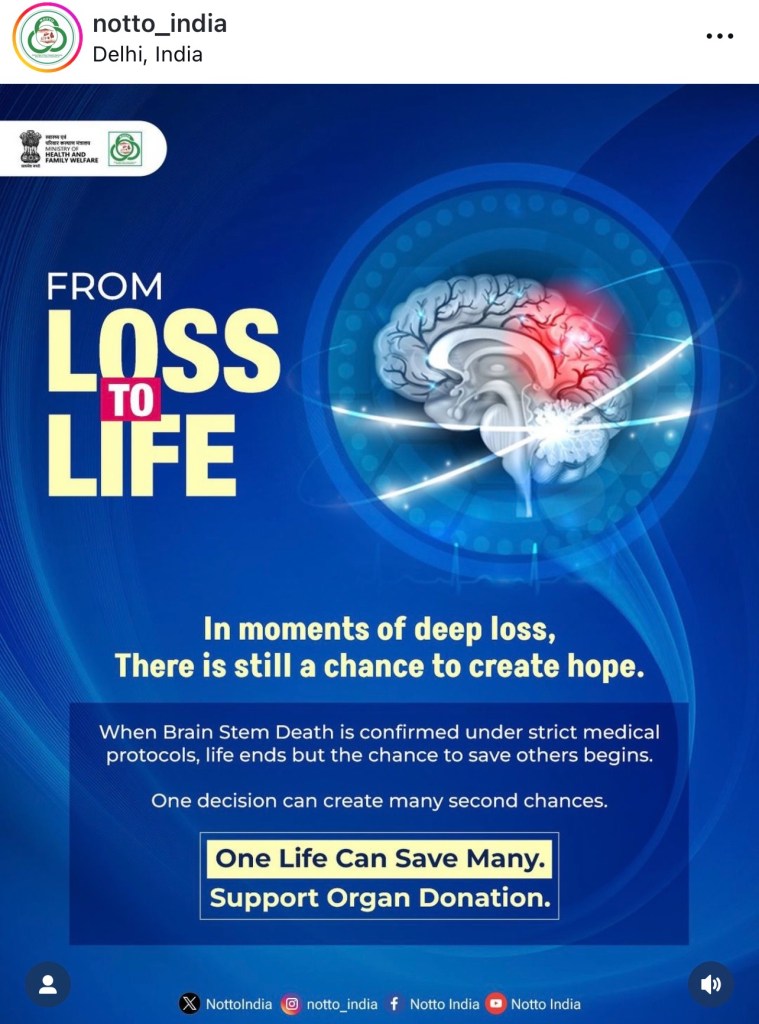
There are plenty of myths surrounding the process of organ donation, particularly due to emotional and ritualistic dogmas, and even literate and educated individuals fall prey to them. For one, a person who pledges once may withdraw their intent at any given time according to their own will. There is absolutely no shame in withdrawal. No organs are donated while the person is alive; the transplant takes place only after an incidence of cardiac arrest or brain stem death. After the organs are salvaged, the body is sealed up, cosmetically enhanced, and provided back to the family with empathy and deep respect.
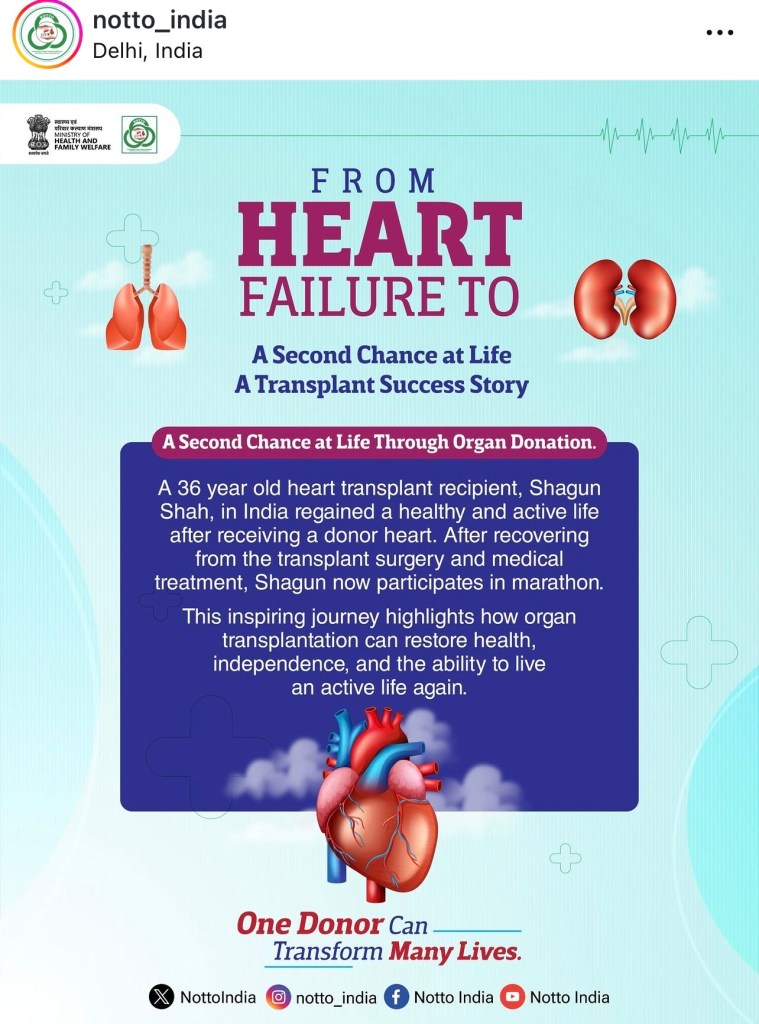
Keeping things in perspective, As of late 2025, over 82,000 Indians are on waiting lists for organ transplants, with nearly 3,000 deaths reported in the last five years due to severe organ shortage. While India conducts >18,900 transplants annually and ranks third globally, a massive gap exists, with kidney and liver transplants facing the longest waits.
But thanks to initiatives like NOTTO, there appears to be a change in the numbers. “The number of transplants in the country has seen a fourfold increase from less than 5 thousand in 2013 to nearly 20 thousand in 2025. Around 18% of transplants currently being performed with organs donated from deceased donors. More than 4.8 lakh citizens registered to donate organs and tissues after death through a Aadhaar based verification system, since 17 September 2023. India leads the world in hands transplants and performs a greater number of hand transplants than any other country.” https://www.pib.gov.in/PressReleasePage.aspx?PRID=2231563®=3&lang=1
Although India is a nation of a billion :
The kidney crisis exists, wherein over 60,000 people are waiting for a kidney. This is largely due to the rise in diabetes and hypertension across India.
The liver gap exists where more than 18,000 patients need a liver transplant
Heart and lung organs are in short supply, where nearly 2,500 people are fighting for every breath, waiting for a donor.
In Canada :
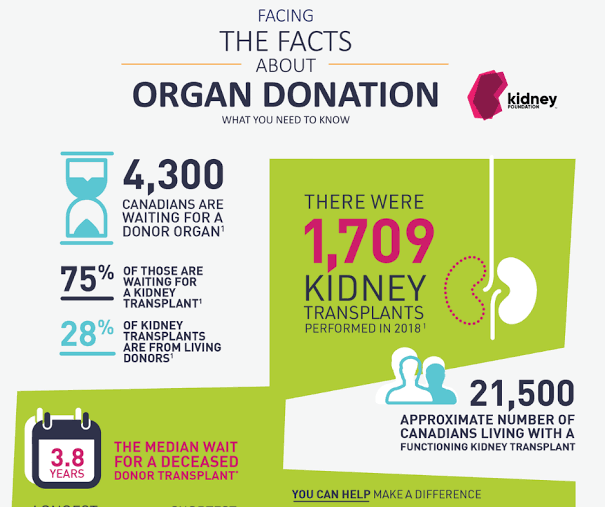
A persistent organ donation crisis, with hundreds dying annually while awaiting transplants despite roughly 3,000 procedures performed yearly. While 20% of donations are from living donors, low registration rates (approx. 20% of the population) and missed potential donor opportunities create severe shortages.
Regardless, Organ donation is a gift that you can give to someone with the most minimal effort and through the general power of your awareness.
If it is of any condolence, and you have any doubts or need encouragement, then I am not your preacher. Me and my well to do neighbour are on the list.
Its how we make things better for those around us, You, me and many more just regular people who are like us. Thanks for taking the time.
fyi this post has reached Canada ! cheers!
 BeyondTheMargins
Leave a comment