Im a newbie homebuddy, back to India, after 10+ yrs in Canada serving the northern territories and being one of the only Indian females to be in this role. Using this blog to share the experiences of the dramatic differences of temperatures, terrains, people and climates
FYI this blog has no use of AI. This work is my own, no stealing of original content. thanks
“Success is born out of arrogance, but greatness comes from humility” – Marco Peirre White
Hola friends, it seems this is one of the only appreciation blogs for the Rural North and it seems to be picking up speed pretty fast. The public is appreciating the beauty and strangeness of the Rural north and all the odd unknown places located in the Rural North Manitoba, i.e., Pine falls, Winnipeg, Churchill, Beausejour , Bissett (my favorite) and we haven’t even got to the impressive stories of the department yet and the Steinbach Mennonite communities, which is going to be a whole different ball game and so much fun! Not to mention the family and court system dramas and the provincial drug testing facilities of Manitoba…. the Fun has not even started yet! It seems we are picking up speed on this blog and the likes and referrals are coming in fast particularly from all the Canadians and the Americans who don’t live in the rural north and some people from India who have never seen these things before!.
Whatsoever, I am glad i was first hand able to bring this to you!.
Meanwhile I have been busy or rather might be busy next couple of weeks so the posts might be slow but rest assured, they will come originally all from the source itself …
Due to my association with the family and criminal court systems in Canada , particularly my routine of seeing a provincial judge about 4 times a month, I’m sort of busy with one university currently.
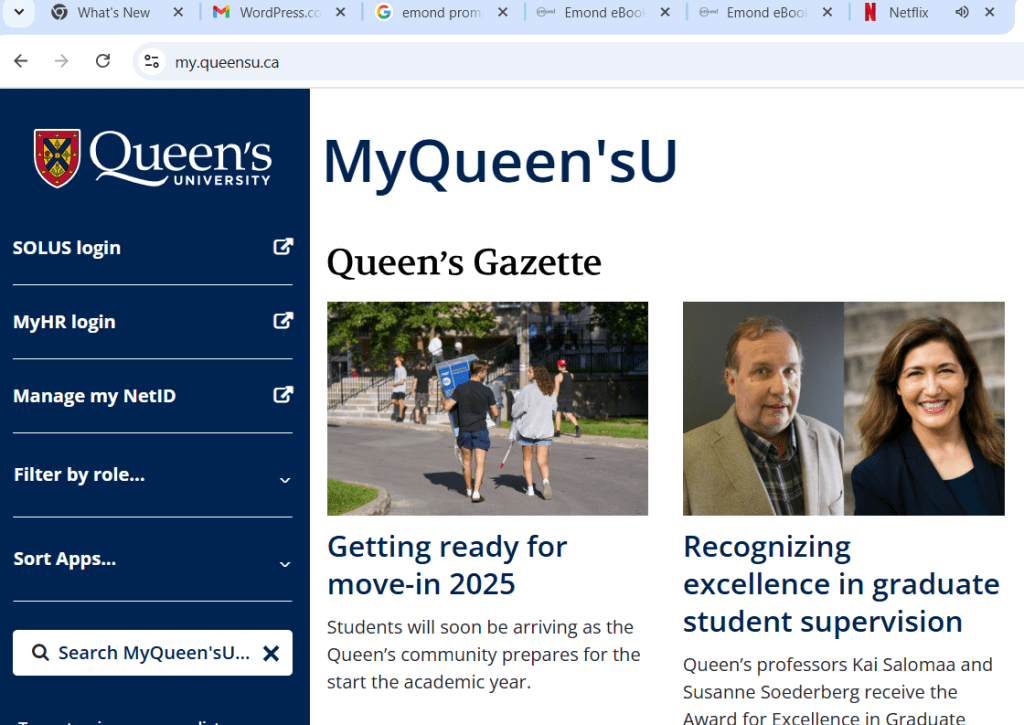
For anyone whose interested a boring Solus account of Queens Canada. Discussions after discussions, where the professors expect you to already have read the materials before class and have yourself prepared before class. The professors Harvard Emeritus do not let things slide, a bit of and a lot of reading materials pre class and lots of challenging discussions which require research with real world scenarios and clientele and getting your socks extremely dirty.
Meanwhile the Queens Solus portal is confusingly full of applications. There is nothing that is lacking in the Queens solus portal, the Smith school of business and engineering is apparently the top 10 of Canada a sort of Ivy league of Canada. Queens is pretty much up there and full of it and she believes she deserves it – my my.
So far, the staff at Queens has been highly attentive, very helpful, the system has been attuned to the students and helping them succeed and the professors are world class. The getting in criteria is always real world experience and ingenuity and sort of an Avanti Garde “what did you do out there in your life that makes you special?” which I’m sure many can get there hands on. .
Whatsoever, I wholeheartedly attribute Queens to be the beautiful gift of the Rural North, a place I cherish and feel a commitment to. It became clear, though, that even Queens had a profound love for the Rural North!, and I found myself swept away in that fervor.
Although the population of Canada is a mere 40 million people spread over a large area of land, they still seek even more privacy and seclusion. This leads to conversations with colleagues and friends during the summertime resulting in something like this.
“So where are you heading this summer?”
“Oh, we are heading to our cabin in the remote wilderness. We’ll light a bonfire there; there will be no internet or TV, and we are going to stay there for the rest of the summer now!”
It boggles the mind why anyone would want more “remoteness” and “privacy” when already there is so much privacy in this country? But that’s the Canadian mindset for you.
Privacy, seclusion, and safety…
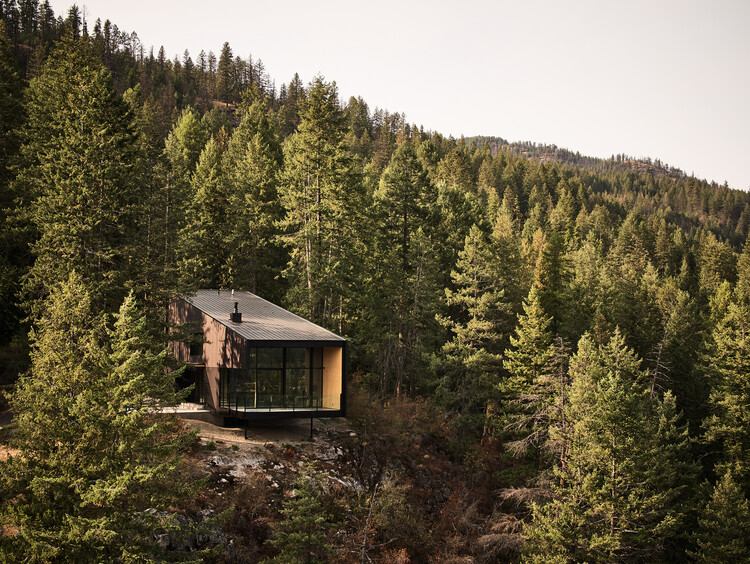
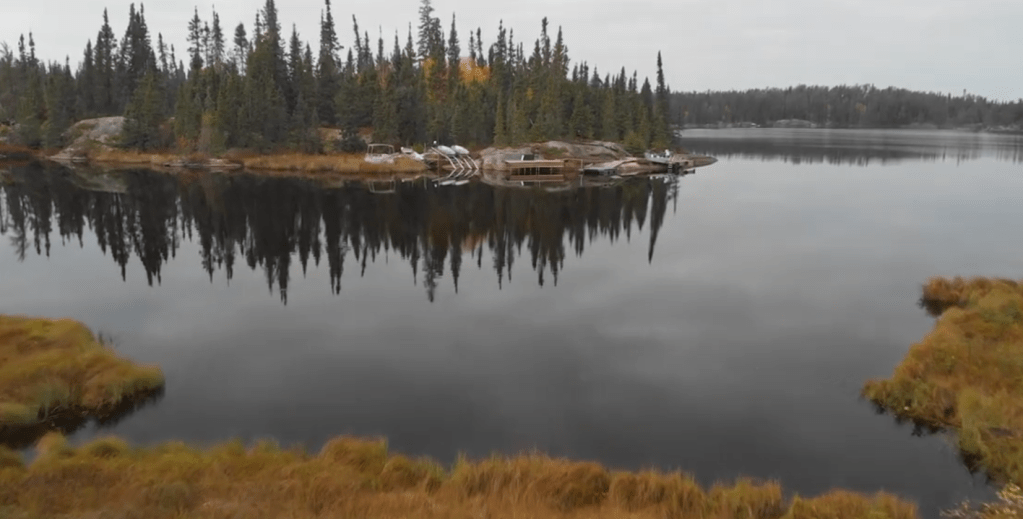
It results in building houses in strange and unreachable locations like this.
Privacy, seclusion, ‘safety’..
Or this,,,
…..Privacy, seclusion, ‘safety’….,, ‘safe’ …..must feel ‘safe’ at all times….
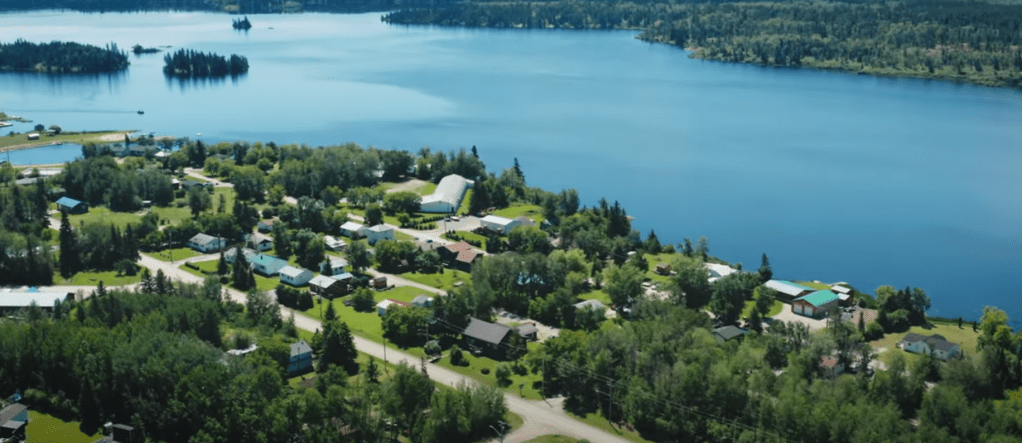
This search for ‘privacy and seclusion’ leads many to live in an almost unreachable untouched place in the remote wilderness like Bissett, Manitoba.
Further away from the remote town of Pine Falls, about 4 hours more, is Bissett, Manitoba.
It would be right to say that if Pine Falls and Beausejour and Churchill were the Rural North, then Bissett was so far up east and into the isolation of the green Canadian prairies that getting there was quite the work.
If Winnipeg’s population was a little less than a million, Beausejour’s population was about 5,000, Pine Falls housed around 1,400 people, and Bissett housed around just 100 people.
The San Antonio School in Bissett had only 6 children in total, and there was only 1 principal who also served as the teacher for all the children plus 1 administrative clerk.
At a distance of about 400 km from the Rural North provincial building, you could either drive to Bissett or you could fly there through small planes.
Bissett, Manitoba, is so remote in the prairies that it is difficult to drive there with your own vehicle. The government provided with a fleet vehicle, which was perfect for a long trip to Bissett—a large Ford Explorer SUV well equipped with all the GPS, up-to-date computational systems necessary, and a satellite tracking system. As mentioned before, the Canadian government is rabid about its employees well being and security—you don’t go to Bissett in a substandard, not well-to-do vehicle.
As one approaches the settlement, the road becomes a lot like the roads in India: ill-maintained, narrow, and broken apart, and one starts getting in touch with the “untouched” flora and fauna of the great Canadian prairies. Wild animals are easy to spot, roaming about without fear or disturbance, and come out into the open to interact.
Needless to say, Bissett was one of my most favorite places to visit for work.
One had to actually witness the beauty of Bissett in person to really believe it.
There are lots of beautiful places in the world, but untouched natural beauty with very minimal human involvement or interaction is not the easiest to find. The water is different in color, the air feels different, and wildlife is more transparent and out of hiding.
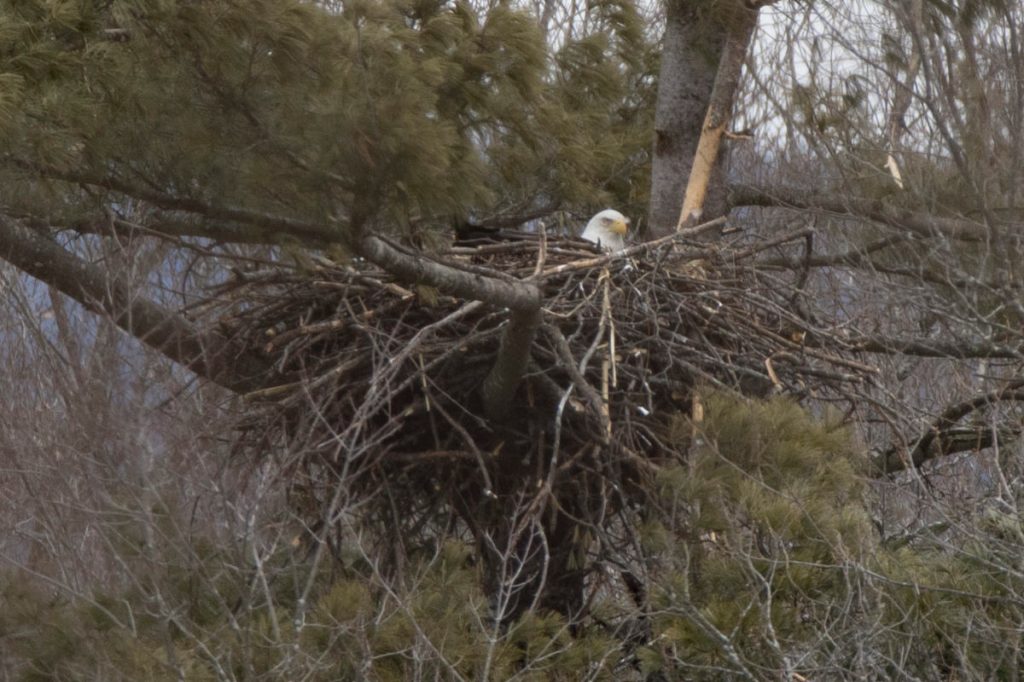
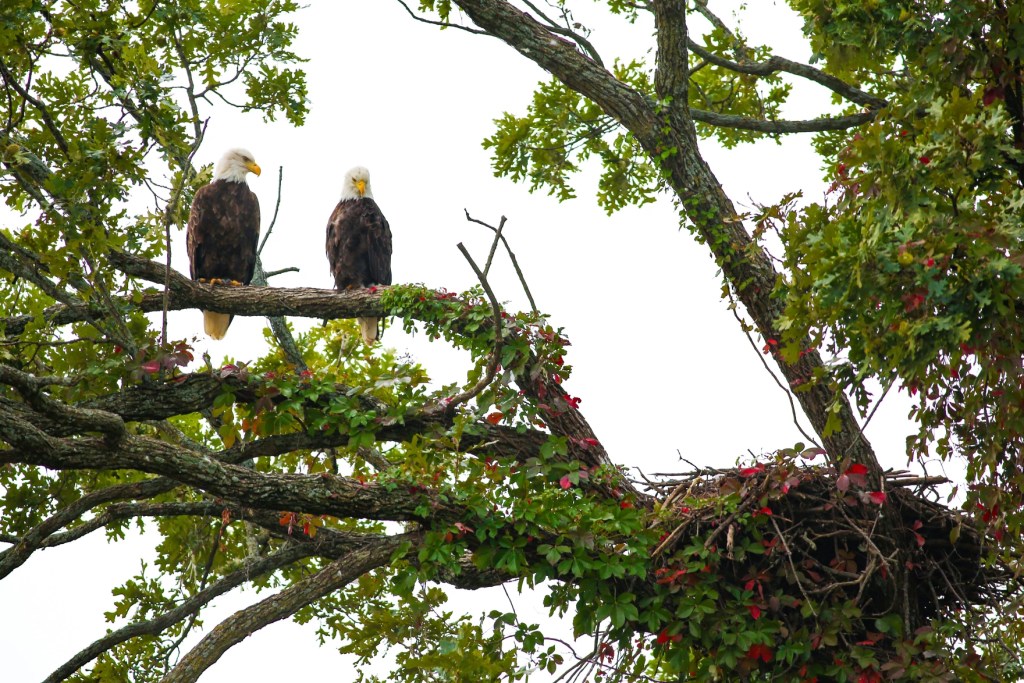
One of the my favorite birds to encounter is the Bald Eagle, and in Bissett you will find ample nests of the Bald Eagle. These nests are not made of small twigs but massive branches and often 2 mtrs by 2 mtrs wide. Bald Eagles mate for life and are monogamous, indicating higher cognitive functioning and personally to me nothing compares to the site of a Bald Eagle on the road in the wild . The most majestic breath taking bird on the planet.
Above a bald eagle nest Bissett.
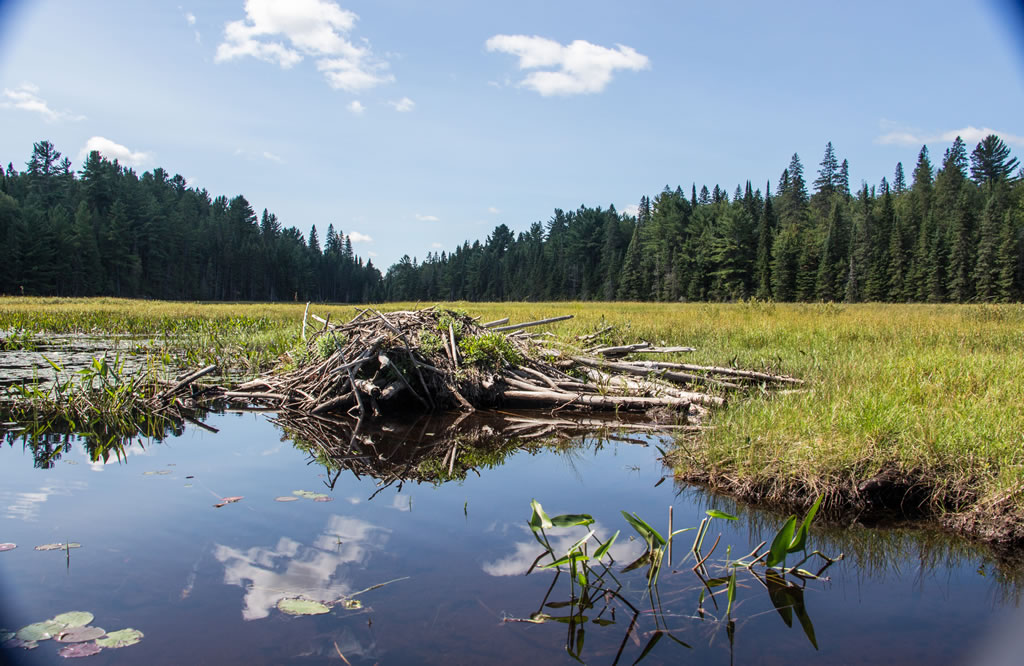
Another animal that is a common sight is the Beaver. A beaver is a natural engineer who can build dams which obstruct a lot of the water flow through the use of twigs and debris. Needleless to say the Beaver is pretty smart with a large head to body ratio , indicating higher cognitive functioning and a rich social life.
Although living in rural north can be isolated living. But as i heard the government had 1 position tentative opening up for Bissett with just 1 employee for 100 residents of Bissett and it was in the “maybe phase”. I began to wonder that i could do this, and i would absolutely love that position. Afterall Bissett was a dream natural location.
Bissett was 2 hrs. away from the local police station, and that meant no accountability. People drove around their big trucks and vehicles with no number plates on them and no insurance. This was a free man’s land with only miles and miles of untouched nature around and nothing else. It was as if you went back in time to the 1950s in the rural north with nobody bothering you about absolutely nothing and no concept of time, and no rush at all. Civilization, the concept of existence and the world as we knew it came to a stand still and a stop. It meant that living in Bissett, “life” meant something different. Some people had satellite phones to talk to their relatives in the cities and otherwise large dishes to get that internet running. Occasionally Bissett was inundated with geologists and students of geology and meteorology studies. A gold mine existed in Bissett which employed about 20-30 gold miners. Below the Bissett Gold mine.
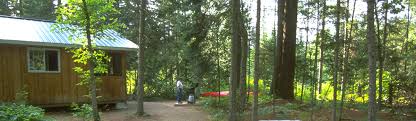
Fyi a couple of years back it was on the news that a geologist was looking for rock samples at night in a cave. Two residents of Bissett got drunk and approached him at night in the forest. Bissett being so isolated and with only a mere 80 – 100 people living there, the student had a massive panic attack and ran across the woods terrified only to later figure out the intruders were local residents roaming around the forest a bit drunk if anything…. His Panic attack at the unexpected sight of another human being was so voracious that it made it to the Winnipeg news.. Regardless a small beautiful shack existed for government employees in Bissett – incase somebody wanted to crash. It looked a bit like this.
Another one looked a bit like this
I thought to myself, if anything if it was Bissett, then i could do this for a long time….
Flashback to the past a little bit with a post about it and a change of topic.
After I changed streams to a Psychology honors from a master’s in joint source coding and predictive variable modeling, I did a thesis in behavior modification under the best professor in the province. My supervising professor was the founding father of the research facility for behavioral intervention programs in St. Amant Hospital in Winnipeg, which was the only large-scale residential hospital for individuals with birth disabilities like chromosomal disorders and developmental disorders such as autism, mental retardation, et al. Research went sideways on devising different ways to help these individuals adapt to life.
A lot of people like to believe Psychology is all about Freud, Jung and all the general “talking stuff”. It is – if you want to take it lightly and it is NOT if you want to take it seriously. If you want to be the best in something – and I had a general rule that I would only work under the best, learn from the best and possibly be taught by the person who developed and founded the technique itself. If Aaron T. Beck founded cognitive behavioral therapy, then it is always worth it to attend a talk at the University of Pennsylvania by Aaron T. Beck. You never want to compromise on the teacher if you want to be the best with ludicrous thought processes in a field, and you want to be “moldable” enough for the teacher to work you up as they like.
However, since psychology was NOT the only program I had committed to, I DO NOT give the credit of my understanding of the subject to it.
Before Psychology, I was enrolled in a course which was a master’s in Joint Source Coding. This course was all about predictive variables and signal processing. Advanced, statistical, and digital signal processing were core to it. In short, random variables and how they intermingle and how you predict an outcome of a system. How do you predict the solution to a three-dimensional cube? Algorithms for pattern recognition schemas and fractals. The word “Predict” was pretty central to everything. Every single thing in the course had one requirement – random variables and probability. If one did not know these things, then one could not learn anything else from the course. Although I had minimal interest in the long-term future and engagement with the outcome of the course, as I did not see myself doing it for the rest of my life, I put in extra effort for one of the courses which drenched me and made me cry and also gave me sleepless nights, but yet became the focal point of the lens I used to deal with every other subject in the future. A course called “Pattern Recognition.”
The course was taught by a Polish professor named Miroslow Powlock, nicknamed “Mirek.” If you have seen the Oscar-winning movie “A Beautiful Mind,” with Russell Crowe portraying John Nash, the mathematician, then it is worth knowing that “Mirek” had a lengthy career working under the actual protagonist of the movie – the real John Nash. Mirek liked to go skiing, play with cubes in his office and find their solutions, and he had a dark sense of humor. “Mirek” also qualified as one of the top 2% scientists in the world. The course was built and designed to push you and to give you sleepless nights, the kind where you learn something new and your brain exerts extra pressure to create a framework for navigation, but once you get there, your brain does not go back to the old patterns of behavior.
From predicting the outcome of a system, I came into psychology. Sounds pretty different? Not if you enter the domain of behavior modification and prediction. A certain strain on the word prediction again.
Up there again in the department of psychology, I got some experience with the best – the director of the department of clinical psychology and pathology. The man had 30+ years of experience with psychopathological, delinquent, and antisocial elements, and he ran the entire department of clinical psychology and research under his belt. While working under him, it was imperative to be “moldable.” Since psychology is not a subject that one engages in behind the computer system and plays with cubes and their solutions – there was a tactile art and a “mindset” to it which you had to ruthlessly perfect. The director had an absolute loathing for the use of over-emotionality and sentimentality in the field while dealing with pathological clients. For the most traumatized individuals, there was an act of humanized empathy, but never any real involvement. After all, 30+ years of pathology, would you think he involved himself with everybody? The Director taught me a few things. When you meet pathology, you remain in observation mode, anecdotal to a bald eagle flying high above the ground with a sharp eye. The eagle observes, but nothing ever touches the eagle.
You never involve yourself with the client, and as you observe, you make mental notes and use your concrete knowledge to diagnose and offer treatment and intervention. The idea was that helping a client was impossible if there was any involvement with the client on any level at all. This approach made clinicians immune and almost inertly ruthless. Nobody understands how inertly cold the best psychologists and psychiatrists in the world actually are. You get their time, empathy, and understanding, but you will never know if it was genuine or if there was a real association behind it. The truth of the matter is, if you did get some “genuine” empathy or so, then either it was an act, or the clinician was not a great clinician.
The technique taught by the Director, Harold Wallbridge, which I developed and worked on, meant that I remained immune to almost all forms of vicarious trauma in my career. Many people asked me if my job “affected” me in any way – the answer was NO, and absolutely NOT. My job was FUN, and it was just a job, and I never came home with the burden of my work, and I never went to bed sleepless over a client. That’s what it means, doesn’t it – to learn from the best?
Moving on to behavior modification and prediction – again I was working with the best, my own supervising professor. The man taught me everything I needed to know about it. However, the real concreteness of thought behind it came from “Mirek.” Who said not completing a degree was a waste? It was never a waste if one single course could change you.
I told my professor I was not comfortable working with the population in St. Amanté and wanted to spread my wings a bit and experiment with different populations with different sets of challenges. I was redirected to a job at a provincial ward for level 5 delinquent youths—the worst in the province—funded by the federal government. Excited for my new work as a newbie behavior analyst, I couldn’t wait to apply everything I had learned to a different, more “challenging” set of population. The job was to create behavioral intervention strategies for harm reduction and recidivism in the population in the ward and to come up with quick strategies that the battered staff could apply to the inmates. What I did not expect was that the set of population was so challenging that it rendered me effectively useless…..
But i cant do anything with the “software” if the “hardware” is corrupt….
It is imperative to note that I had a strong grasp of behavior modification, but that was only a part of my honors thesis and was not the only thing I worked with. I was also versed in the structure of the brain, behavioral genetics – (again studying from the best professor in town who bred 12 dogs to determine if genetics impacted behaviors with lab rats for experimentation), a bit of pharmacology, and could read CT scans and PET scans of patient brains. It is important to understand that “talk therapy” or behavior modification techniques in delinquents go only as far as the brain is unafflicted. Experience has taught me that if the behavior was so unpredictable, and so off the beaten path, and there was a historical element of pathology or injury through a parent, then before applying the principles of behavior modification, it was imperative that we recommend the ward to a PET scan to get a scan of the brain and see what is really going on… Maybe we are just past the point?
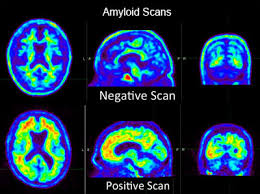
A PET scan is a machine where a harmless radioactive substance is injected into the bloodstream and, as the individual enters the scanner, the areas of the brain that are functioning and not functioning light up like a firefly under a microscope. This is particularly useful to assess which area of the brain is functional and which is not, and to determine if there are any birth defects in the brain that would bypass our ability to modify overt behavior. For those interested, a PET scan machine appears like an MRI machine, and the results tend to look a bit like this. A PET scan is so sophisticated that it can differentiate between a depressed brain and a manic brain.
Back to the Ward in question, a 15 year old female with an overly anti social behavior record, propensity to suicide, harming the staff on a regular basis and also self harming as a method for manipulation and Machiavellian. The ward being extremely violent and unworkable i began to suspect that this was not an ideal candidate for a behavior modification program and the current premise was not adequate to meet her needs. In Essence the ward was becoming a threat to the staff’s safety and i started suspecting if the province was looking at a legal lawsuit in the future. I will leave the sensational theatrics out of the description , however lets just say that level 5 youths are not individuals you will encounter on your regular sunny day outside your home….
For five days in a row I observed the female, made multiple notes, looked at her history and how she was born and in what circumstances she was born. It was evident that she was brought to the facility after birth immediately, given up for adoption, and her mother had delivered her in circumstances of heavy heroin addiction, likely having damaged her brain during gestation. Looking at all the information and after gathering everything, I decided that a behavior modification program was a waste of time before we determined what her brain actually looked like and if the parts of the brain that assisted in cognition and modularity were intact. I recommended her for a PET scan to see what was going on “inside her head” – literally.
Needless to say, the results came back and, as always, clinicians are strangely ecstatic to look at PET scan results because it is such a window into a person’s soul.
The results of the PET scan were so MIND-BLOWING that I took one look at it, dropped the report on the desk, and just sat back in shock as to how ANY human being could function with a brain like THAT, and still eat, sleep, and go about their random day. I was now not even a bit surprised at the violence the staff was encountering.
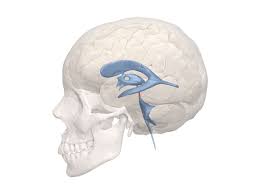
To elaborate – The ventricle tubules in her brain had actual holes in them. For the unversed, ventricle tubules are two moist tube-like structures which elongate from the spine and the nervous system and right up to the brain, spreading into the two hemispheres of the brain. The tubules carry a liquid substance inside them called cerebrospinal fluid, which is composed of ions, minerals, and many other things. The function of the tubules is to essentially “clean out” the brain as they take away debris back to the channel in the spine where the cerebrospinal column exists. The tubules carry a liquid and have a circulatory system involved, which is exactly why they say that “exercise is great for the brain.”
In essence the ventricle tubules look something like this in layman language.
Our wards’ ventricle tubules had holes in them, which meant that her cerebrospinal fluid was essentially seeping into both the hemispheres of her brain… This entire mayhem in her brain was ALL caused as a result of heavy heroin and alcohol use during pregnancy by her mother. Regardless, I was mind-blown to see the results of gestational alcohol and drug use on the brain of a little human being. It takes no effort to say that people who plan to have children should ward off any form of alcohol, cannabis, smoking, and any form of drug use, and this goes for the father involved as well.
I moved on to create a behavior prediction on the future behavior now, taking into account first hand the excessively violent behaviors of the ward. It became apparent, that the ward needed to be moved out of the facility into a locked psychiatric facility, preferably with sedatives and a locked jacket on. The timeline for a severe hostile behavior was less than 2 months at hand and alarm bells started ringing. In discussion with the supervisor of the facility a bit of an argument ensued about “the humane” element of moving a 15 yr old child into a locked psychiatric facility. I argued that it was what was “best for the child” considering that the behaviors were so violent that it had a high likelihood of producing a fatality or a casualty within the next 2 month window maximum and if not acted upon the likelihood of a slapstick lawsuit was evident.
I was asked – well, what good are YOU for? Aren’t YOU here for “modifying her behavior” and helping out in reducing essentially just “that”? The PROBABILITY of her causing a FATALITY?
But I can’t do anything with the “software” if the “hardware” is corrupt…. – I protested…….
Indeed such decisions are never easy, and the supervisor stormed off saying that she needed time to think and needed a second opinion. Within 30 minutes of the supervisor storming out, ……3….2….1…. the ward brought a rock from outside and sodomized a staff member on the face …..
Police were called right away, and the staff was taken away. The ward was immediately moved to a locked psychiatric facility – the one I had recommended. Was this luck? A hard sell.
After the ward was moved on the same day, the supervisor came to me, confused and sad but visibly and strangely impressed and taken aback, and asked, “So WHERE did you learn this strange behavior modification and prediction thing from exactly?” …..
The greatest pleasures of working for families is meeting people on a regular basis. People of all different ethnicities and backgrounds, people with multiple quirks, gifts, and weird and interesting personalities. As a clinician, you never really know what a common, seemingly innocuous looking man or woman is capable of until you look a bit closer… There is no such thing as “not extraordinary.”
A good clinician also possesses a few qualities. For example, a good clinician is able to replace the idea of ‘fear’ with the idea of ‘curiosity’ and ‘intrigue.’ This allows the clinician to remain detached and deal with a plethora of things without falling into the debilitating trap of judgment, attachment, and fear. It does not mean that the person is accepted for their wrongdoings or behaviors… It is the playground of the clinician to interact, extract, objectify, detach, and to sometimes just observe, all while appearing oblivious.
Image courtesy Google: movie Cocaine Bear (2023)
The movie “The Cocaine Bear” was released in the year 2023. For the unversed, this is a dark humor satirical comedy film about a grizzly bear who gets its hands on a stash of cocaine planted by two drug dealers in the mountains. Needless to say, the grizzly bear gets ‘hooked’ on the cocaine and goes on a rampage hunting down the drug dealers in the forest for his stash of cocaine. For those interested, I recommend this movie if you like dark satirical comedy.
But not many have encountered a real story of a bear hooked on cocaine…
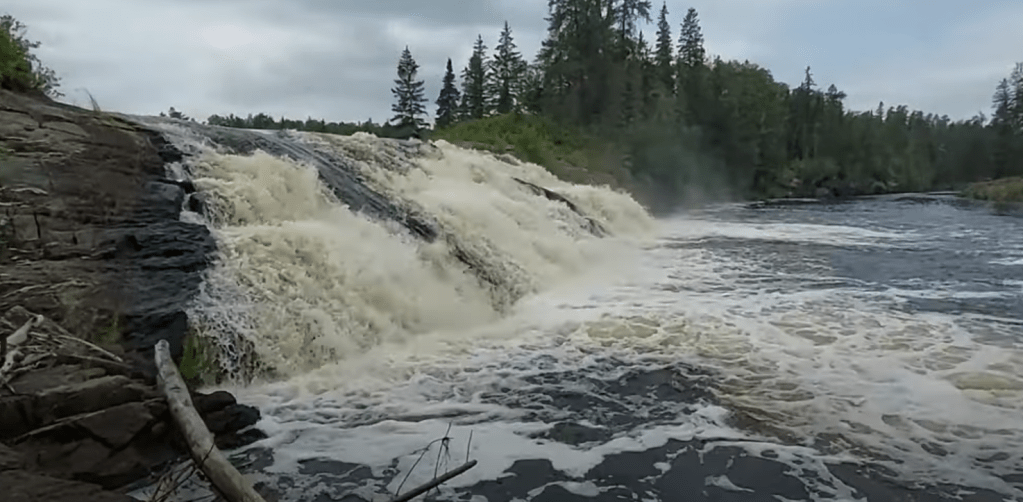
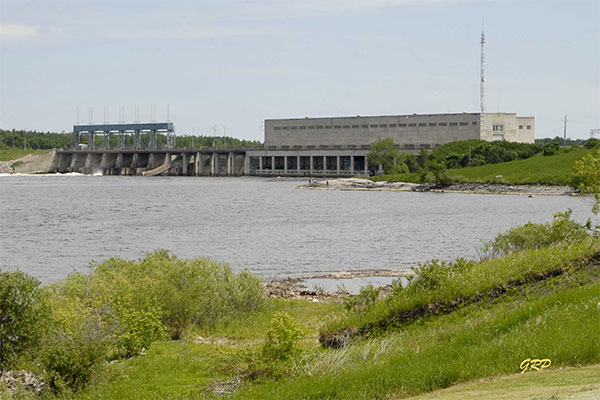
Powerview Dam – Pine Falls, Manitoba
The Town of Pine Falls is a tiny town up north in Manitoba, primarily built around the Power View Dam. It is home to a generous population of First Nations, Cree, Métis, and Anishinaabe populations of Manitoba.
For the unversed, the bears and animals in general hold a special place in the bibliography and culture of the Native First Nations community of Canada. Manitoba is home to the maximum number of First Nations communities in all of Canada – a record 141 clans in total. For example, it is a common belief that bears are not to be hurt or hunted, for they may be a reincarnation of your own mother. The names of bears, bear claws, hawks, and eagles are regularly taken as last names. Dreams have a special place and are considered to be a form of higher language. The use of cannabis, herbs, and different ‘medicines’ are part of a normalized culture passed down through many generations. Needless to say, the First Nations indigenous culture is eclectic, spiritual, and full of ancestral knowledge usually derived from nature and its seasonal effects.
One of the responsibilities I executed for the job from time to time (albeit reluctantly due to the remoteness of the location and absence of employees), while working in Pine Falls, was to serve court docket papers to individuals residing in Pine Falls. Crime and drugs being rampant in Pine Falls and myself being one of the only staff in Pine Falls, I was regularly assisted by the local Royal Canadian Mounted Police to carry out the responsibility on behalf of the Canadian government. It would look a bit like being escorted around by a bunch of these guys around town for serving papers. You would have your sedan following 2-3 RCMP SUVs on the highway with sirens blaring.
As mentioned earlier, the Canadian government is rabid when it comes to its employees’ health, safety, and well-being. It would mean that if you have a client on the list who has multiple criminal indictments, either the police would serve papers for you on your behalf, or if you need to do this on your own, a bunch of the above tough-looking guys would assist you. No matter how hardened the criminal, the presence of just 2 cops with you works like a magic potion that makes everyone extremely charming and well-behaved.
As illogical as it may sound, in legal terminology it is imperative that a representative of the government department should ‘serve’ the papers face to face to the person at hand, and this is rarely ever compromised on. If the person refuses to ”be served’ or ‘take the papers’ from you, you can extend your arm that carries the court papers, drop the papers on the floor, and just say “you have been served” and walk away. As long as a government representative shows up at your door and sees you face to face, and drops the papers on the floor with the statement ‘you have been served’, there is no way out of ‘being served’.
Story time :
One of my strange clients who I was supposed to ‘serve’ was a man with multiple criminal indictments whom I had the pure privilege of having been able to ‘serve’ papers in person only just one time in 2.5 years of work, mainly because he was always on the run from the police. The rest of the time was spent finding out his whereabouts from the RCMP, visiting his mother’s home for ‘serving papers’ with the cops in tow, and driving around behind the RCMP, with the RCMP behaving like the guy’s best friends who had just about too many run-ins with him. It was as if they both ate and lived under the same roof now, the police and the mysterious man. “Oh, he must be here,” chuckled the officer, as we went to 8 different houses trying to ‘serve’ the man court papers. “Please just serve him wherever you may find him – if it is under some rock or across the ocean or up a tree – please, thank you,” I said as I handed the officer the court papers to serve him. Had he not been so elusive I would not have had a 2.5-year association with his mother and his family, and this would have been a one-time thing only. As luck would have it, he was always on the run from the law, and that required me to start visiting his family home with the cops in tow in order to be able to “serve him.” The association with the mother and his sister now continued for the next 2.5 years with amazingly strange and bizarre incidents.
Our client – “the elusive man” was a First Nations resident who had an antisocial personality disorder, a huge drug problem, and a lengthy criminal history. It meant that he was almost always ‘wanted and hunted’ for either one thing or the other. On the one first occasion where I did manage to “serve him,” he did not utter a single word to me, appeared “spaced out” and strange, and had absolutely nothing to say to me at all. Let’s just name him “the elusive man” considering he barely ever enters the picture at all. His mother, I will call her “Grandma,” because of her love/hate relationships with chihuahuas (a breed of dog which I vehemently dislike) and because she had no control over her children. “Grandma” is important as I will be writing more about her in the future. His sister would be “Bee,” because she just liked to bake a lot and she liked gardening.
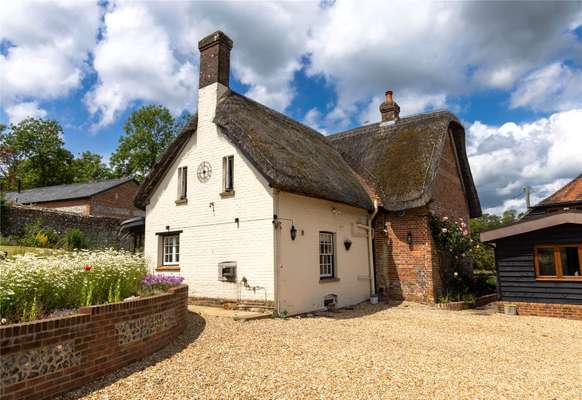
Grandma’s house looked something like this, with a neighbor next door who had a fenced-in yard and a large dog in the yard.
It was a well-known fact that our client, “the elusive man,” was a voracious cocaine addict. His modus operandi had been to drop in at his mother’s home from time to time, do some coke, and then “flee” out of sight and out of mind when he came to know that the cops were looking for him. Such became his expertise in fooling the cops that every time I went to his family home with the police, I asked “grandma” where he was, and she would inform me that she did not know and that “he left just 2 days ago” or “he left just yesterday” or “haha you missed him! He just left a couple of hours ago this morning!” . . . The elusive man was so overconfident and aware of every nook and cranny of Pine Falls that he apparently came home only to do a round of coke and flee again from the cops… This was quite an ingenious method, and he made the police look profoundly and extremely stupid…
In 2.5 yrs of “attempting to serve” papers to the elusive man, it was imperative that I got to know the family more, chatted with them, got to know their quirks, their personalities, and a lot of many other things. The family opened up to me, and the sister “Bee” offered to bake me some indigenous “Bannock,” a First Nation cuisine, a kind of native bread made of dough and salt. It looked a bit like this.
As time went by, one of “Grandma’s” passions was small dogs, which she loved, called chihuahuas.
It was not the problem that the dog was a Chihuahua; the problem was that Grandma had around seven Chihuahuas.
These little things, with small and tiny brains (no offense to small dog lovers), were unrestrained and, on every visit, made rounds around the house in a sort of mad and insane “herd” like behavior, jumping from the dining table/chairs, back onto the couch, and then into the kitchen, all light brown in color and giving the impression of some group of wild deer or animals running wild into the Serengeti in Africa.
Grandma adored all her chihuahuas and was extremely possessive of them. Knowing dog lovers as much as I do, it is always wise to never comment anything unwise or negative about the pet in front of the owner, no matter how stupid-looking and annoying the pet actually may be.
Grandma’s neighbor was another First Nations community man with a much larger dog, a known aggressive and strong breed of dog – the Pitbull. Very full in musculature, and about 60-70 lbs. It is a well-documented fact that Pitbulls possess a specific gene that increases aggression, decreases impulse control, and Pitbulls are 2-3 times more likely to bite in the same location once they turn aggressive, making them more likely to cause casualties. Needless to say, Canada has very strict regulations on the ownership of Pitbulls; however, in a remote town like Pine Falls, where surveillance is limited, the inhabitants like to do just however they please.
On repeated visits, it became clear that Grandma and the neighbor were obviously not getting along. Primarily the neighbor’s complaints were that the set of wild and loose chihuahuas were sneaking onto his yard and were likely to become an easy target for his Pitbull. This led to constant rounds of bickering and arguments. Both separated their houses by a fence in between them, and as time progressed, Grandma’s comments about the neighbor next door and his dog became more and more vile, demeaning, and disgraceful.
Finally, the straw broke as was expected. I visited the home in around May of the year and found grandma irate and moody. It was grandma’s general disposition to be almost a “little off” and “drowsy” and “incoherent” on many and most visits [Note this point – important for later], and I was attributing it to her age of 63 and putting up with the strain of having a run-around son – “the elusive man” and the cops and the Department of Families always showing up at her door.
Must be exhausting, I thought to myself.
However, unfortunately Grandma’s favorite dog of the animal herd kingdom who she “lovingly” called “the psychotic”, had sneaked into the neighbors yard and had been decapitated by the Pitbull. Such was the carnage that nearly nothing was left of “the psychotic” except a few feet here and there and no last minute rites or funeral piers were adequately performable at what was left of him. “Bee” told me that “the psychotic” was one of the first chihuahuas grandma owned and he came around right after her husbands death leading to a great and intense sentimental value. As odd as it may sound i was somewhat sympathetic, sad and also strangely happy to hear the demise of “the psychotic”. A very odd mix of emotions, “one down six to go ” i chuckled – but nevertheless I vehemently and almost voraciously offered grandma my greatest sympathy’s of all time. I don’t believe i had ever been this shamelessly sympathetic before in a long time. What she did not know that in my mind maybe, i was on the neighbors side. I too had had enough of this unasked for animal safari on each visit. Afterall many people have dogs, but who has dogs like these? Never mind. I built some rapport with Grandma and told her ill come around next time with the cops, maybe “the illusive man” would return hearing the demise of “the psychotic”.
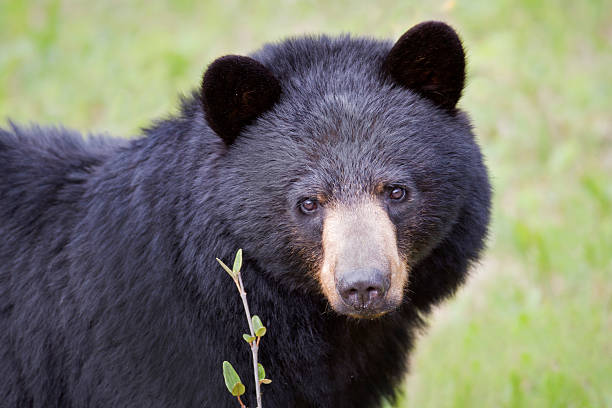
A Black Bear looks innocently at the camera.
The province of Manitoba has a very healthy population of around 25,000 to 30,000 Black bears in the wilderness. Pine Falls, being a community of some odd 1,400 individuals, is located remote enough to attract all kinds of animals that freely roam its vicinity. The sightings of the North American Black Bear are very common in Pine Falls, along with many other animals, such as the bald eagle, moose, the arctic wolf, white and red foxes, deer, elk, and also different fish like salmon and catfish which the bears feed on. The Black bear is intimately tied to the indigenous culture where it signifies values of spirituality, strength, wisdom, and healing. For many Native American tribes, the black bear is a spiritual guardian and protector, with some belief systems considering it a spiritual ancestor. Sightings of Black bears in your backyards, rummaging through your garbage, and eating plants and berries from your garden are unfamiliarly common in the town of Pine Falls. All these different cultural, socio-economic, emotional, zoological, geographical, and traditional variables and factors colace into our next chapter about the Black bear and its association with Grandma…
One of the greatest motivations of the Canadian government’s social integration program is to focus on inclusivity and diversity with an abnormal and coveted spirit of absolute vengeance. Some would argue it is a type of revenge, a revenge from oneself, a revenge from the past, a disownment of the self, or maybe self-hatred. In a massive bustling city like Toronto, Vancouver, and Edmonton, this isn’t a difficult feat to achieve where immigrants regularly rally for jobs and the workplace is anyway a “colorful” integrated affair.
But what about the rural north?
Being the only person of color in the department comes with some incredible and unearned, odd privileges and strange circumstances.
For example, when the premier pays a visit, the administrative officer will like to boast about the incredible “diversity” in the department and turn to you.
If the chief provincial medical officer would pay a visit, the leading practice specialist and the admin will gleefully turn to you.
On repeated occasions of multiple events and with repeated instances of people “turning to you,” the whole affair became rather odd and cringe-worthy…
On one such occasion, when the deputy minister paid a visit, the administrative officer adoringly turned and said, “oh but we have Ansh here.” “Yes, but I am the only one you have” – I wanted to say. However, I played the part.
But doubts are put to rest when an innocuous comment ends up offending your colleagues and superiors far more than it could offend you.
On an occasion where a client went off the beaten path and made an unfortunate comment – the department stepped up, and the person was banned from the entirety of the building. A clear message of ‘those who cannot respect our staff’ are not allowed in the building.
‘Don’t let anyone talk to you like that,’ said the admin.
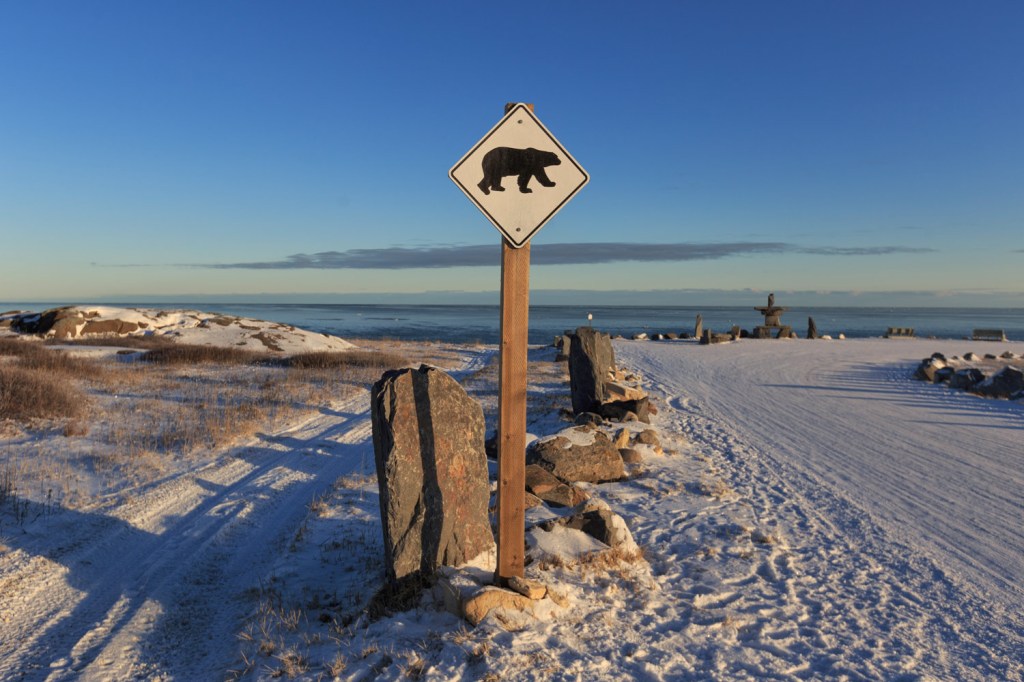
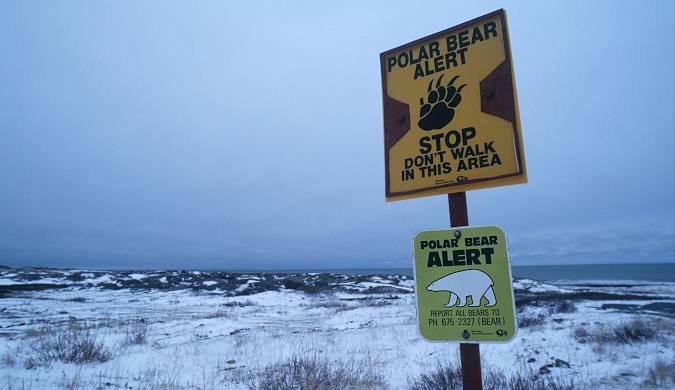
A polar bear crossing sign in Churchill, Manitoba.
We’ve all seen a deer crossing sign on the roads, or a moose crossing sign on the road, and sometimes, often in India, even an elephant crossing sign on the road. But have you ever seen a polar bear crossing sign on the road? The only place in the world where you would have the privilege of seeing one is in Churchill, Manitoba – the polar bear capital of the world.
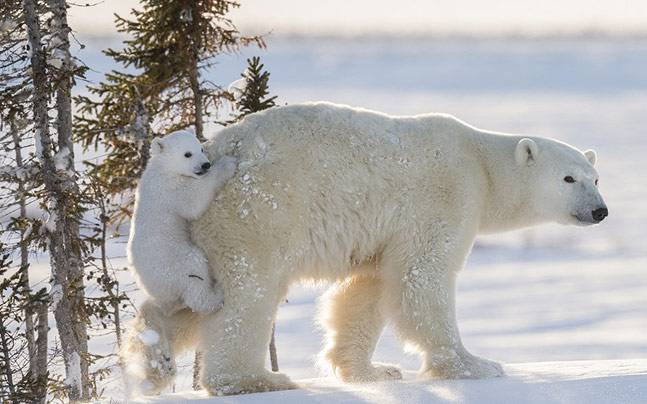
For the majority of the unversed, a Polar bear is the epitome of cuteness, a full-blown bear beauty that can indefinitely “do no harm.” Some people, particularly tourists who visit Churchill, even have strange fantasies of “petting the polar bear” or cuddling with it. Most people’s conception of a Polar bear is something like this below.
.or something like this below (courtesy google)
Which is precisely the problem….
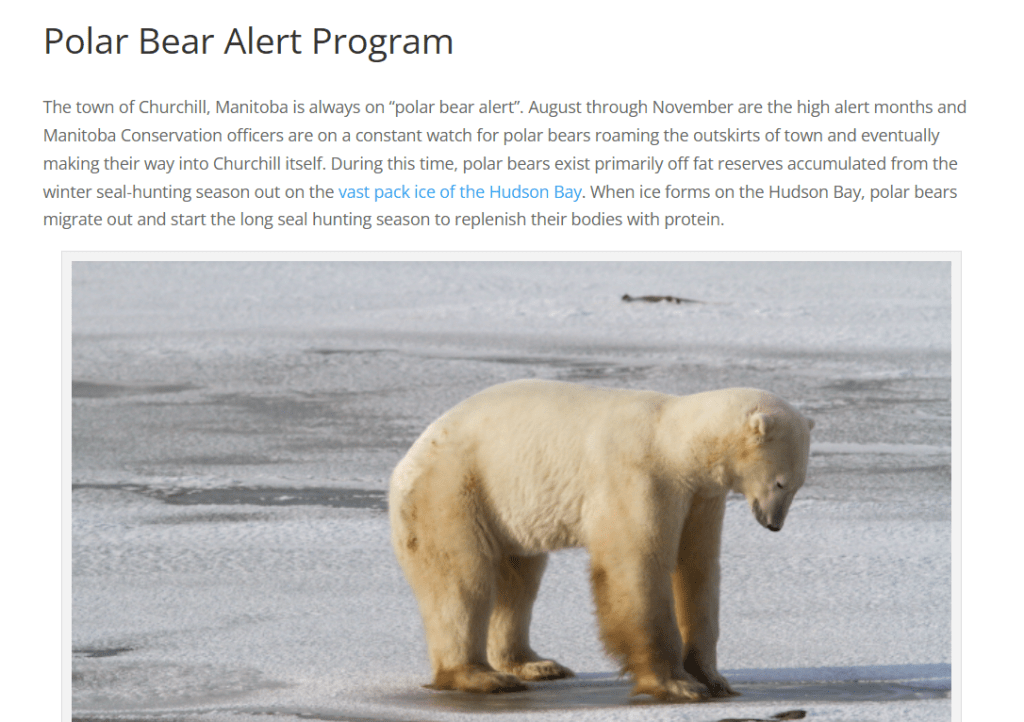
What a polar bear actually, really, really and truly is, is something like this.
Every year during the summer, the small town of Churchill is flooded by tourists who fly in via an expensive charter plane through Winnipeg or arrive via the train to witness the town’s main two attractions: the Beluga Whales and the Polar Bears.
For the unversed, Polar Bears are so common in this town that you might just find one walking in and lounging around on the beach, trying to pet your dog (if it’s not hungry enough).
In particular, the Bear Hierarchy – and for those who are unversed with the north American zoological Landscape. The ferociousness of bears is ranked primarily in order of the North American Black bear being the most modest, docile, approachable and harmless of the Lot. The next in Line is the Grizzley Bear, a well known North American predator which mostly has a home in the Alaskan wilderness and in the American Andes. Although one’s chances of surviving a black bear are pretty high, as we climb the hierarchy of bears, the chances of survival in confrontation dwindle dramatically. The chances of survival if chased by a Grizzley bear are considered very slim. A Grizzley bear does not like to wait around to “kill” its prey but actively takes chunks out of the living prey regardless of its death. The chances of survival now go down even more to a minimal or a zero when we approach the Apex predator of the lot – that is the Polar Bear. Polar Bears due to their nativity of living in the north around minimal food resources are known to be unrelenting and unquestioning . The Polar bears hibernate in the ruthless northern cold and once out of hibernation – they are worse off than Grizzley bears, who are provided with much more ample food supplies around them in the forests. A Polar bear, once out of hibernation has just one instinct and that is to eat. That can be anything – Polar bears will eat dead whale carcasses, dead deer’s, dead animals, a dog, a human being, a cat, a deer – as long as it is a meal, it is a target for a hunt. Needless to say, inundated tourists who try to “pet the bear”, “hug the bear”, or “kiss the bear” or remotely “cuddle with the bear” are the Polar bear’s one sure shot fast food supply when it comes to a really good meal. What can be better than if Mac Donald’s’ comes right to you if you are living in the Tundra?
The attitude towards the bears can be summed up by a quote used by the Canadians .
“If it’s black, fight back. If it’s brown, lie down. If it’s white, good night”
The town of Churchill has its own, what is called a “Polar Bear Patrol” or “Polar Bear Police,” for driving out polar bears that wander inside the town premises. A large vehicle blaring with sirens and polar bear “cops” laced and armed with massive dosages of tranquilizers are equipped for the job. Every time a rogue polar bear “wanders” into town, sirens go off, and the wandering polar bear is driven out via a vehicle, tranquilized, and lifted via a helicopter and dropped off far away from the town premises. This is one of the full-time jobs of the Polar Bear Patrol in Churchill, and the Polar Bear Alert program is one of the heightened feats of Manitoba Conservation, one of the only in the world. Their job is also to educate tourists about the impossibility of ever being able to “pet” the polar bear.
Apart from the polar bear population haunting Churchill, there is another government department that works overtime and relentlessly for the benefit of the local population. It is called the Provincial Department of Families—the ones who employ me.
I visited Churchill on 3 different occasions since my tenure in Rural North Department of Families and it was in Churchill when my first experience occurred where i instructed a student to write a harm and danger statement for court purposes to “child is left alone to wander outside – maybe eaten by a polar bear”. Regardless to say, this was quiet unforgettable.
When the Department of Families came to Churchill, Manitoba, they thought that this project would be one big piece of cake. After all, Churchill was just a one-lane town with a few houses built around it, a population of just about 800, and all the department had to do was provide resources to this location, albeit via a charter plane. How easy could this be? …And oh, the simple, small-minded, innocent folks of Churchill, Manitoba…
It is ironic how even a juggernaut like the government can be deceived by the beauty of a small town like Churchill. What the department did not anticipate was that life in Churchill meant not having enough employment for the local population. Low employment, combined with isolation from the mainland and the harsh climate that kept people indoors, was a pathway to a couple of things: drugs, alcoholism, domestic violence, and crime, which intertwined from one household to the next, all challenged by an incredible dearth of resources to handle everything on behalf of the government. Providing resources now seemed an uphill task, with the majority of the resources residing outside on the mainland. De-addiction centers, health foundations, foster care homes, psychological assessment foundations, drug testing facilities, and the provincial courts all resided on the mainland, with the only way to get there being through a very expensive charter plane or by train.
My one week trip to Churchill cost the government $3000 for a 2 hr. flight along with the arrangement of a driver and living arrangements. It was in Churchill when I questioned for the first time the motivation of drug addicts to sneak in drugs through expensive private charter planes and through train rides. With a population of only about 800, mostly people related to each other, this led to a massive accumulation of open files every 15 meters.
It was like Churchill was now smiling and taunting the government – “not so EASY now IS IT? just 800? what did you really THINK????”.
Fortunately for me, I was to take trips to Churchill as a covering manager. The permanent manager sometimes being away on vacation, I shuddered to think how this role and position was even remotely manageable while sitting in an office in Beausejour. How does one file a case for sexual abuse on behalf of the government while sitting in Beausejour in an office? My respect for the expertise and coolness of the manager grew tenfold. I had my hands full with Pine Falls, and being in Churchill for a week in January of 2023 was like a visit to the South Pole where one resided continuously indoors and could barely go outside in -50 degrees.
8 days doing desk work on behalf of the government in the polar bear capital of the world, looking at file after file of harassment, drug usage, court papers, pending indictments, court dates, and conversing with very supportive colleagues about the best course of action to take with minimal resources around. Should we spend money to send a ward to Winnipeg? And how is that construction phase of the local foster care system coming along? We don’t want to be spending enormous money on charter planes transporting people back and forth from the mainland for subpar business, so how’s that negotiation deal with the province going for something more “on site”? If we do get “something more on site,” then we have to watch out for “conflict of interest,” and the hires cannot be individuals related to the inmates or wards (this is highly likely in a small town with a population of just 800). Worse, the employees need to be drug-free to be employed by the government—was this even a possibility in Churchill? Well, what are the alternatives? We need to pay people more for them to be employed in Churchill from the mainland, and how’s that going?
…oh gosh! Everything is so slow! Well then, let’s get a drink, shall we? ….Well, off to the local liquor store, here we go…. inundated by half the population in the client open file list roaming around in the liquor store…. and alcohol is almost 30% more expensive. They blame the charter planes, they said, and the cost of the transportation, and those godawful polar bears that kept them indoors.
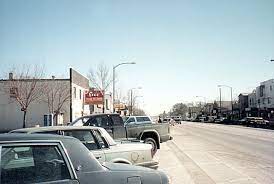
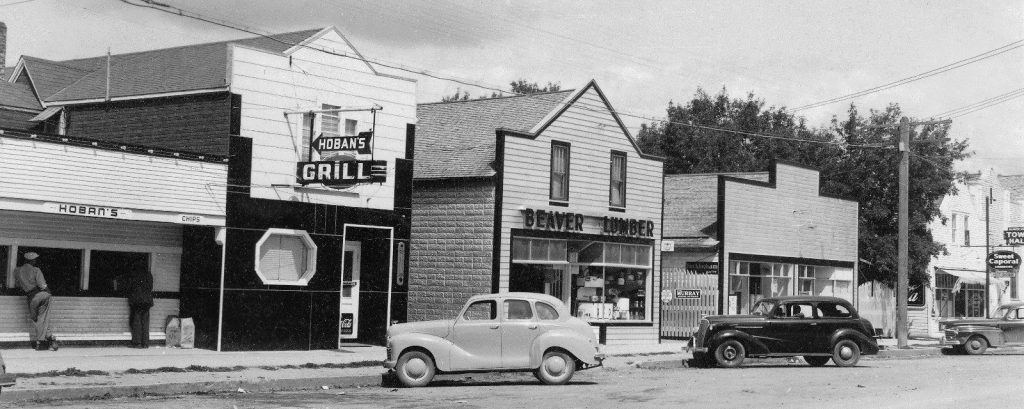
I landed in Beausejour, a timid, remote French town in rural northern Manitoba, in April of 2022. A town where the inhabitants were settlers from the 1950s, and most of the houses were old, picturesque, and French, like those from back in the 50s when the town was established first for the purpose of the Korean War.
The town holding antique car shows from the 50s
My home in Beausejour – a 2 bedroom, established in the 1950s, an extremely cozy country home with a massive backyard and a detached garage. The back deck overshadowed by a massive tree, underneath which I hooked up a bird feeder for the squirrels and the birds. The home was sold to my landlord by my 84-year-old Polish veteran neighbor who spoke 4 languages – Ukrainian, Polish, German, and English. An incredible man who became my friend, taught me how to do crossword puzzles, built me a personal birdhouse for my massive yard, taught me Low German, and gave me a Ukrainian book. My other neighbor was the town mayor – who constantly mowed my lawn whenever he mowed his own yard – an absolute gentleman who did all this completely unasked.
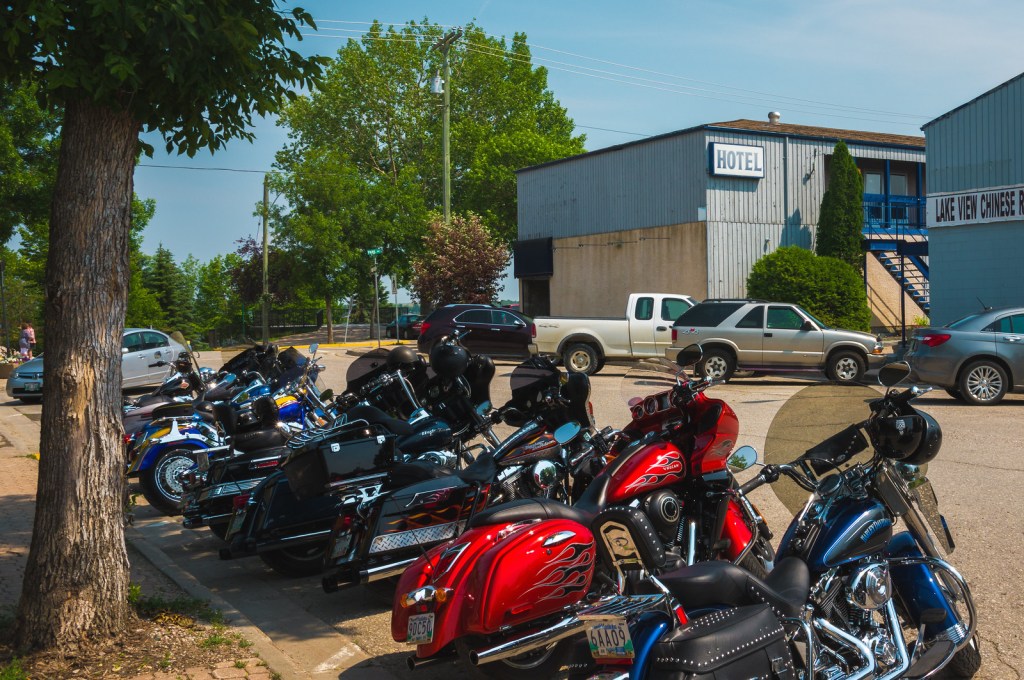
Annual bike and antique car show in town
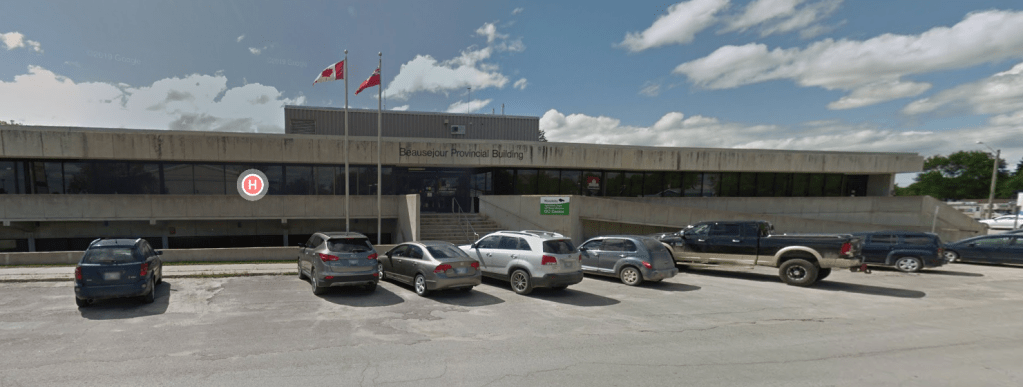
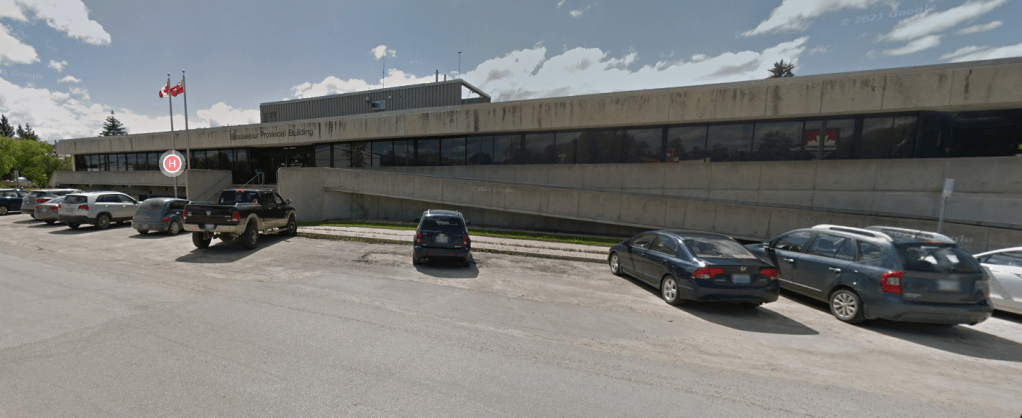
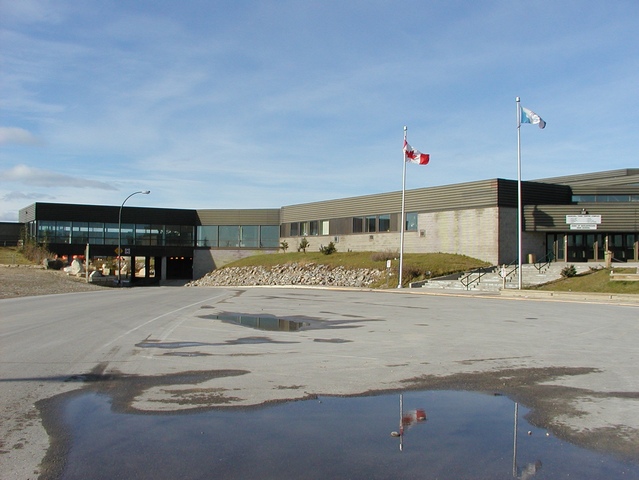
My job in Beausejour was to be the employee of the only government building in town, which was the main employer of most of the individuals who migrated into town. The rural northern provincial building – a massive beast set in the 1970s, with basement mazes underneath it and housing multiple antagonistic yet “we live together” government departments within its premises, such as Justice, Families, Wildlife Conservation (a big one for Canada), Probation, Employment Income, and the Police. A creepy, mysterious maze lingered underneath the old provincial building, and to discourage clients from getting lost in the maze, staff put out tapes on the floor directing people to their way out in case they thought they were about to encounter the Minotaur.
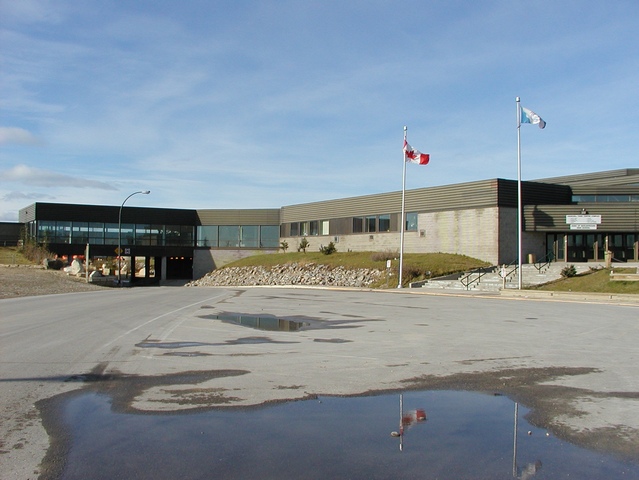
The rural north provincial building. A google street view. My office on the left wing basement on the other end of the canadian flag. The administrative officer of the building is Edwin Greenberg who welcomed me on my day 1 (the son of Dave Greenberg the founding father of Manitoba’s foster care system)
For most unfamiliar – the Canadian government is such a beast and so rabid about its employees’ health and well-being that if you complain about “mold” in the building (I was guilty of complaining but was not the cause of the actual reconstruction) – the government will go on a psychotic drug-induced haze of a million-dollar “reconstruction” project lasting about 8 months where it will tear down the entire left wing of the building and rebuild it once again. This may sound like hyper-effort for something like “mold,” but it did occur. Unfortunately, when I came around after the massive reconstruction phase (unaware that it had already taken place) – I again complained about “mold” in the building…. I was told to be patient now as those massive “drillers” outside were for the purpose of “getting rid of the mold,” and the building manager was astounded yet firm as “we were all in this together” now – the fight against the mold.
Beausejour being a French town – the energy of the town was cozy, neighbourly, a town where everyone knew everyone. This was a far cry from the German town Steinbach near it which housed me previously for the Southeast Manitoba government. The rivalry between the French and the Germans and their antagonistic cultures is apparent even in the Canadian prairies where German towns have been established post WW2 in the southeast and French towns take up the area in the rural north. The German towns (Steinbach, one of which I was employed previously with) have an incredibly different air of coldness, indifference, aloofness, reservedness and an overall “not much to do with you” vibe. The French town (like Beausejour) is an opposition in culture, behaviour and warmth levels – consider them nosy, warm, chatty and fluttery in behaviour. For a person like me from India, I would liken the comparison of Beausejour to very much being in an Indian neighborhood with almost everybody in everybody’s business – all the time. This was never the case in a German town – where even your daddy’s business was not your business and appointments are required for dinners with parents (being mindful of the parents’ time, age and energy). How these two countries came to be actual neighbors is a historical conundrum in itself.
My new arrival in Beausejour as the only person of color and an employee of the government quickly became well known and attracted immense curiosity and joy from the local natives. People wanted to know who the new “import” in town was and what the historical background was. All kinds of rumors swirled about the ethnicity of the new import – from half Italian, Indian, half Spaniard to a South American Ecuadorian, exemplifying the lack of connectivity of the local French population to the gentry living across the ocean.
The thing about small towns is that you don’t need to make too much effort “to make friends” – you are friends by virtue of being an inhabitant of the small town – as long as you act like you live in the small town. My 84-year-old neighbor was the first to introduce himself on the first day of my moving in; he reared the spare tires of my car and put them in the garage aptly without being asked. So began our friendship lasting a good 2.5 years, during which I had the privilege of barging into his home unasked, and he helped me around with the town gossip and also minor construction materials.
My home, a redone and maintained 1950’s French construction with an old geyser in the basement and handmade wooden hangers from the 50s’. Appropriate area for a bonfire used mostly in the summer time right in the backyard.
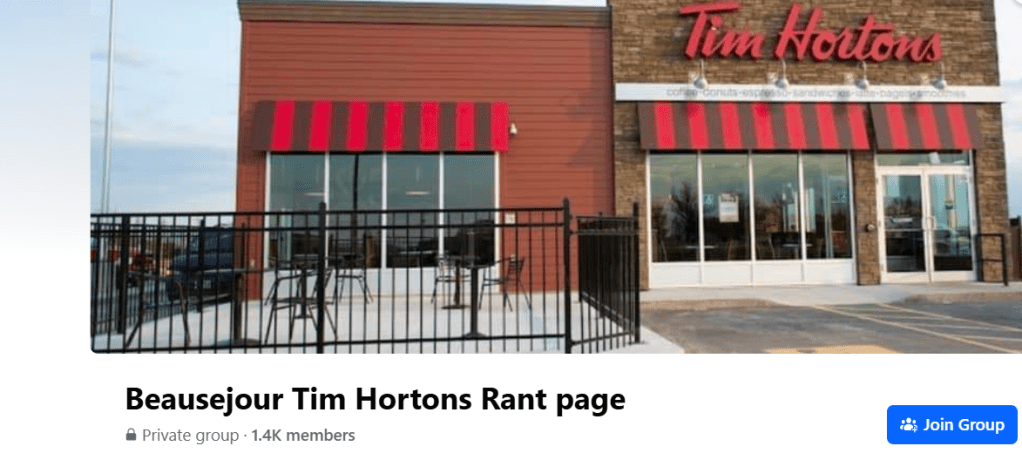
My workplace was a 5-minute walking distance from my beautiful home. The home, a sprawling 1950s construction, had lots of green yard around it and a back deck with a barbecue on board. Fortunately, the landlord took care of snow shoveling and also grass mowing of the massive area during both winters and summers. My routine consisted of getting inside my Lexus in the early morning hours and driving to the only coffee shop in town – Tim Hortons – and ordering a large coffee with 2 creamers. Sometimes I grabbed a few more cups for colleagues. Tim Hortons is Canada’s answer to America’s Starbucks, and for the unacquainted, it is better tasting coffee than Starbucks and seems to fuel every Canadian’s morning blood circulation to face the blasting winter outside…
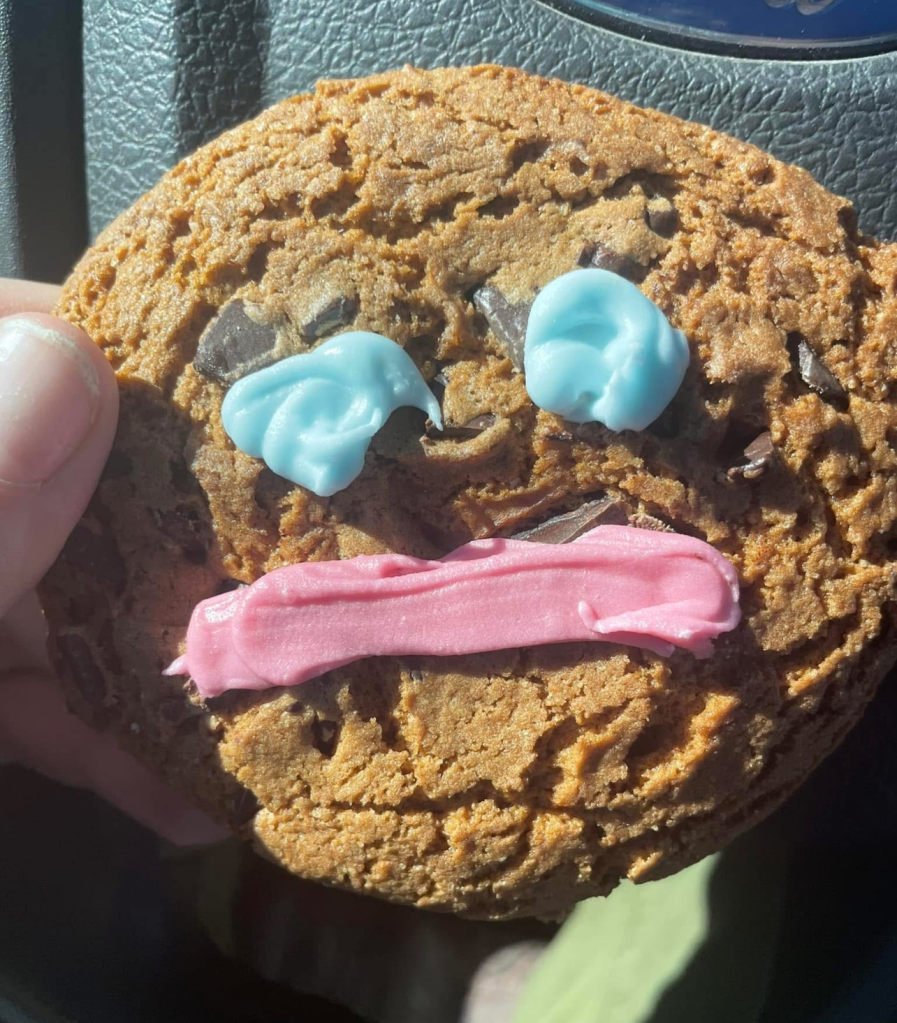
For the outsiders, let me mention that the service in this particular Beausejour Tim Hortons was so bad that the locals dedicated an entire private “Tim Hortons Rant Page” to bashing the local Tim Hortons shop. Complaints encompassed all kinds of things – and the staff appeared to take revenge by drawing weird faces on cookies that were supposed to be smiling cookies.
Needless to say, once I settled in – I too was welcomed with arms wide open into the town’s private rant page. A loving and growing community of about 1.4k town ranters. Must I disclose more? What happens in a small town stays in a small town..
Town politics aside, I was welcomed at work by the administrative officer of the building, Edwin Greenberg (the son of David Greenberg – the founding father of Manitoba’s foster care system), and the leading practice specialist, who showed me around the old, maze-like Provincial building and also conducted the orientation at work after transitioning to the rural north area. I would be in charge of the Pine Falls office now, another remote town up north with a massive indigenous population of Cree/Metis and Anishinaabe. Keys were provided for the office up north in Pine Falls, which would take up my Tuesdays and Thursdays. My year would include occasional flights to Churchill, the polar bear capital of the world, up in the northern terrains, where the only inhabitants were the native populations of First Nation individuals of Canada and occasional tourists who flew in to witness beluga whales and polar bears. “Here are your keys for the Pine Falls office, this is your laptop, and this is your cell phone, and here is the code for the Pine Falls office along with your keycard and your ID card,” said the leading practice specialist.
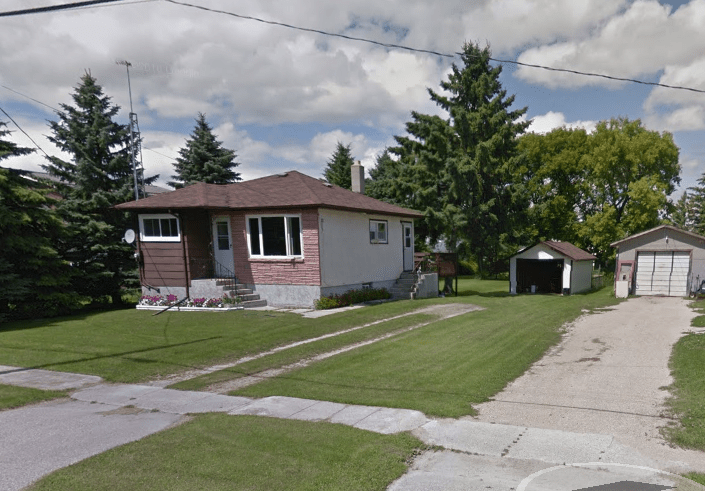
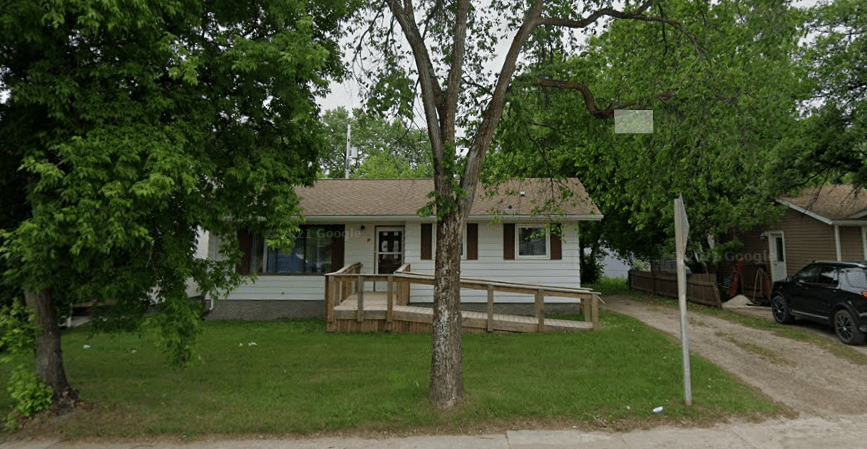
The above is not a random “house”. It is a house bought by the province of Manitoba and converted into an office for the town of Pine falls. The “house” is equipped with first grade security equipment to protect data privacy and call in the cops incase there is a break-in within an astounding 5 minute window. The town being very remote and not having access to any normalized large buildings , this was the only option for the province. My sitting place for every Tuesday and Thursday.
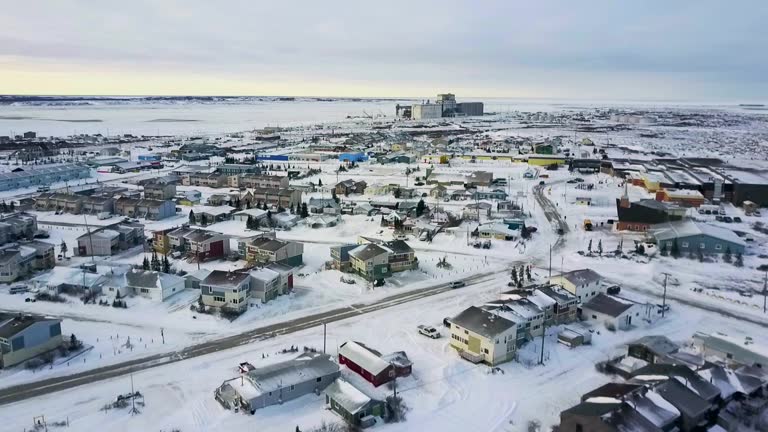
The town center of the province for Churchill Manitoba, the polar bear capital of the world.
I took the keys, thanked “Dave” or “Davie Berry” as we liked to call him, and ended my first day at the office. Back in my new home, lying in bed, I reflected. So here’s my journey – born in Ranchi, India, a remote town. I grew up in the remote mountains in the north in another small town. I did some schooling, completed an engineering degree, moved to Canada, changed my stream, and got employed by the government of Canada. Tumbled to a German town and then onto a French town. Here I am in rural north Canada, the only person of color in a small 1950s French town, the only woman of color to work in Churchill on behalf of the government, about 65,000 miles away from home (a town accessible only by railroad and charter planes and plunging to -50) and handling a position of another remote town, Pine Falls. Working with the First Nations community of Canada (a community and culture I knew nothing about) – there were too many “I know nothing abouts” and “first time arounds” here – the French, the Germans, the First Nation Cree/Metis/Anishinabee, – and me. It doesn’t sound or feel so different, does it? – why? In a way, it does – in a way, it doesn’t. I dropped the schema in my brain and realized I never really even think about these things – it makes me surprisingly simple-minded and also incredibly adaptable, almost malleable as that of a slice of tin.


















 BeyondTheMargins